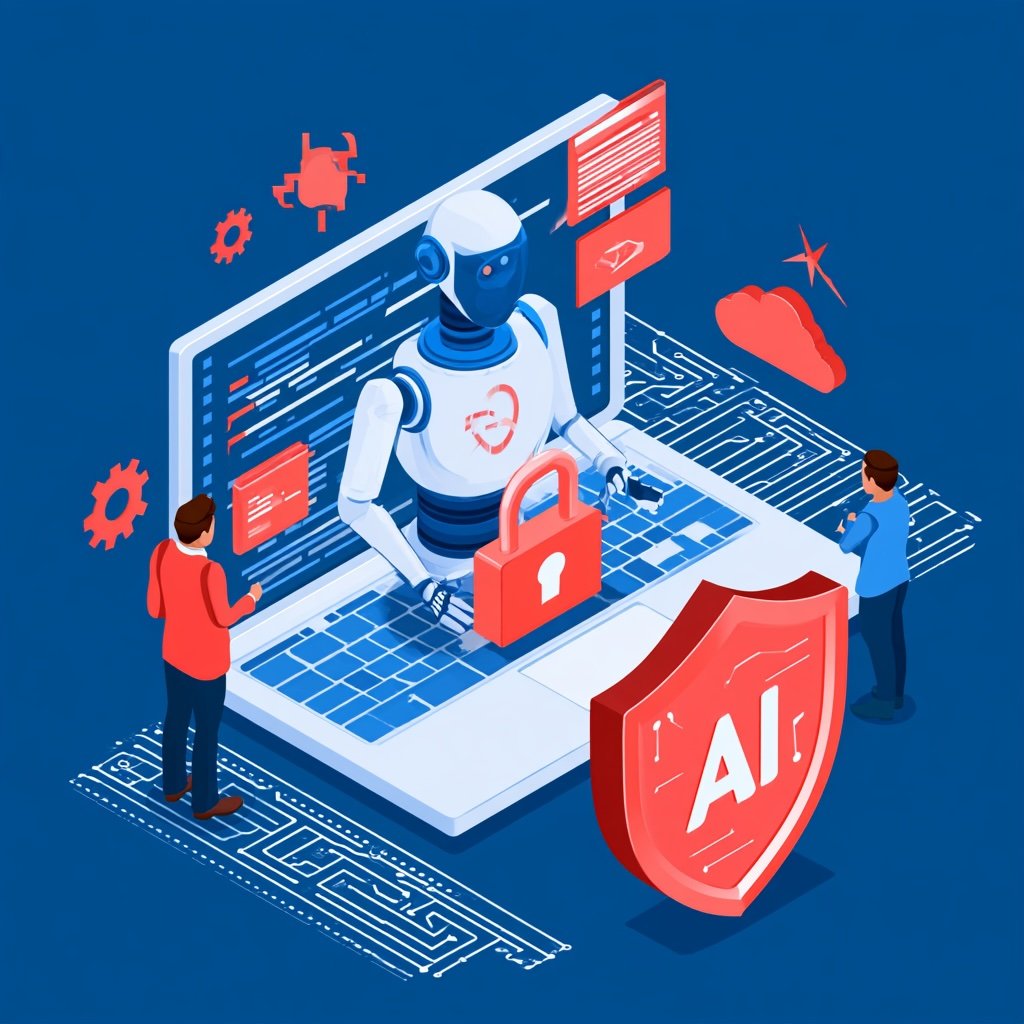

AI agents are no longer just chatting. Today, they book meetings, update records, write code, and move data between systems. That power is exciting. However, it also opens new doors for attackers. That is why AI agent security has quickly become a top concern for IT and business leaders alike. In this guide, we’ll cover the main risks, the frameworks that help, and the practical steps any team can take.
Why AI Agent Security Is Different
Traditional apps follow fixed paths. By contrast, agents make choices. They plan steps, call tools, and remember past context. As a result, a single bad instruction can ripple across several systems before anyone notices.
Moreover, agents usually hold credentials. They may have access to email, files, databases, or payment tools. So if someone tricks an agent, that person may inherit all its permissions at once. In other words, the agent becomes a very helpful insider for the wrong side.
Meanwhile, adoption keeps climbing. McKinsey found that 62 percent of organizations are at least experimenting with agents (McKinsey & Company, 2025). As a result, many companies run agents before their security teams have fully caught up. That timing gap is where trouble often starts.
The Biggest Risks to Know
Fortunately, security experts have started mapping the threats. In December 2025, the OWASP GenAI Security Project released its first Top 10 for agentic applications. More than 100 experts helped build it (OWASP GenAI Security Project, 2025).
The list covers several key dangers. For example, goal hijacking happens when hidden instructions steer an agent toward a new aim. Similarly, tool misuse occurs when an agent uses a legitimate tool in a harmful way. In addition, memory poisoning lets attackers plant false information that shapes future decisions. Rogue agents and cascading failures also make the list.
Alongside that effort, OWASP updated its Top 10 for large language model applications in 2026 (OWASP GenAI Security Project, 2026). Together, these guides give teams a shared vocabulary. As a result, security and development teams can talk about the same risks in the same terms.
Least Agency and Tight Permissions
One idea stands out from the OWASP work. It is called least agency. Much like least privilege, it says an agent should only get the freedom it needs for its task. Nothing more.
In practice, that means narrow permissions. For instance, an agent that drafts emails does not need the power to send them. Likewise, an agent that reads invoices should not be able to approve payments. Each extra permission adds risk without adding much value.
Furthermore, give every agent its own identity. Shared accounts make it hard to trace who did what. With separate identities, you can log each action and revoke access quickly if something goes wrong. Also, set time limits on credentials. Short-lived access reduces the damage if a key leaks.
Building an AI Agent Security Plan
So, how do you put this into action? First, inventory every agent in use, including the ones teams set up on their own. Shadow agents are surprisingly common. Second, rank them by what they can touch. Agents with access to money or customer data deserve the closest watch.
Third, add human checkpoints. High-impact actions, such as payments or deletions, should require approval. Fourth, monitor behavior over time. Unusual patterns, like a sudden burst of file downloads, can signal a problem early.
Finally, test your defenses. Try feeding agents tricky inputs to see how they respond. This kind of red teaming reveals weak spots before attackers find them. In short, treat each agent like a new employee with keys to the building. Train it, watch it, and limit where it can go.
Security as a Business Decision
Security is not just a technical checkbox. It also shapes whether AI projects survive. Gartner predicted that over 40 percent of agentic AI projects will be canceled by the end of 2027. Inadequate risk controls are one of the main reasons (Gartner, 2025).
Therefore, strong AI agent security protects more than data. It protects the investment itself. Leaders who build safety in from day one avoid painful rollbacks later. Moreover, customers and partners notice when a company handles AI responsibly.
Likewise, regulators are paying closer attention to automated decisions. Clear logs and documented controls make audits far less stressful. As a result, good security habits pay off in more ways than one.
In the end, agents can bring high speed and value. However, that value lasts only when trust comes with it. With clear rules, careful permissions, and steady monitoring, teams can enjoy the benefits while keeping risk in check.
References
Gartner. (2025, June 25). Gartner predicts over 40% of agentic AI projects will be canceled by end of 2027 [Press release].
https://www.gartner.com/en/newsroom/press-releases/2025-06-25-gartner-predicts-over-40-percent-of-agentic-ai-projects-will-be-canceled-by-end-of-2027
McKinsey & Company. (2025). The state of AI in 2025: Agents, innovation, and transformation.
https://www.mckinsey.com/capabilities/quantumblack/our-insights/the-state-of-ai
OWASP GenAI Security Project. (2025, December 9). OWASP Top 10 for agentic applications for 2026.
https://genai.owasp.org/resource/owasp-top-10-for-agentic-applications-for-2026/
OWASP GenAI Security Project. (2026, August 4). OWASP GenAI LLM Top 10 2026.
https://genai.owasp.org/resource/owasp-genai-llm-top-10-2026/