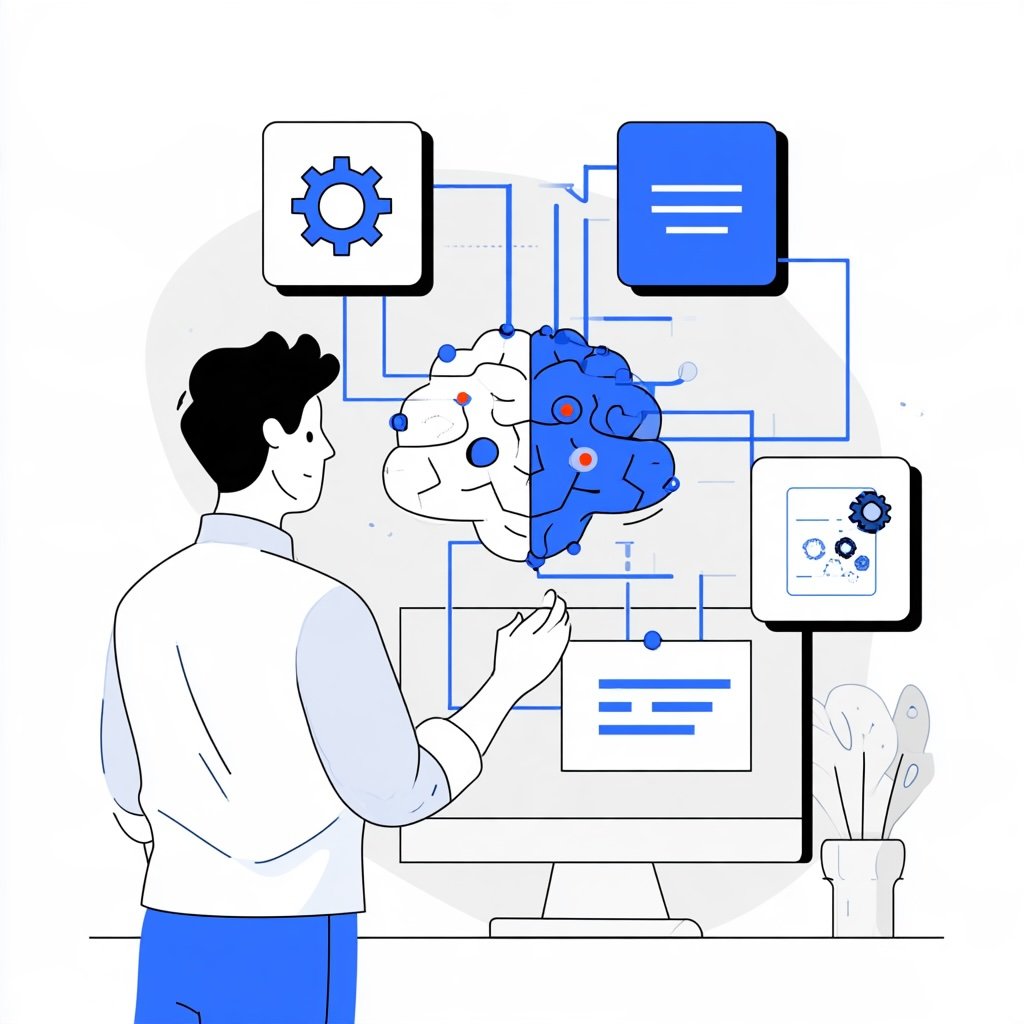

Every business has tasks that repeat all day long. Invoices arrive, forms get checked, and emails need routing. For years, simple bots handled some of this work. Now, however, AI process automation is changing what those bots can do. Instead of following rigid rules, newer tools can read, sort, and even make small decisions. So, this guide breaks down what that shift means and how to get started without feeling overwhelmed.
What AI Process Automation Means Today
Traditional automation works like a recipe. It follows exact steps and breaks when something unexpected shows up. By contrast, AI adds judgment to the mix. For example, it can read a messy invoice, pull out the right numbers, and flag anything that looks odd.
Furthermore, the newest wave includes AI agents. These tools can plan several steps and use other software to finish a task. According to McKinsey, 62 percent of organizations are at least experimenting with agents (McKinsey & Company, 2025). Still, most remain in early stages.
As a result, many companies now blend both styles. Rules handle the predictable parts, while AI handles the fuzzy parts. That mix tends to deliver steady results with fewer surprises. Think of it this way. A rules-based bot works like a vending machine, while an AI tool acts more like a helpful clerk. Both have value, yet each shines in different situations.
Picking the Right Processes First
Not every task deserves automation. Therefore, start by looking for work that is frequent, repetitive, and easy to measure. Good examples include invoice processing, ticket sorting, data entry, and report drafting. Each one happens often, and each one has a clear finish line.
Next, check how stable the process is. If the steps change every week, automation will struggle. A steady process with occasional exceptions is ideal. AI can manage the exceptions while rules handle the rest.
Also, consider the people involved. Talk to the employees who do the work now. They know where the delays hide and which steps cause the most errors. Their insight will shape a smarter design. Plus, involving them early reduces fear about job changes.
Avoiding the Hype Trap
Excitement around agents is high. However, not every product labeled as agentic lives up to the name. Gartner predicted that over 40 percent of agentic AI projects will be canceled by the end of 2027. The main reasons include rising costs, unclear value, and weak risk controls (Gartner, 2025).
Similarly, Forrester expects fewer than 15 percent of firms to switch on the agentic features in their automation suites (Forrester, 2025). In other words, most companies are moving carefully. That caution is healthy.
So, before buying anything, ask vendors for proof. Request case studies that match your industry and size. Also, run a small pilot with clear success measures. If the numbers do not move, walk away. There is no shame in waiting for better tools.
Building Your AI Process Automation Plan
Once you pick a process, map it from start to finish. Write down every step, every handoff, and every decision point. This map becomes your blueprint. Then, decide which steps rules can handle and which need AI.
After that, set up guardrails. For instance, require human approval for payments above a certain amount. Likewise, log every action the system takes so you can review mistakes later. UiPath notes that governance built into the automation itself is becoming essential to keep agents secure and compliant (UiPath, 2025).
Moreover, plan for change management. Explain to staff what the tool will do and what it will not do. Offer training so people can supervise the system with confidence. Finally, schedule regular reviews. Processes evolve, and your automation should evolve with them.
Measuring What Matters
Automation only pays off if you can see the results. Therefore, pick a few simple metrics before launch. Processing time, error rates, and cost per task are good places to start. In addition, track employee time freed up for higher-value work.
Meanwhile, keep customer impact in view. Faster processing means little if quality drops. So, sample outputs regularly and fix issues quickly.
Also, compare results against the old process. A simple before-and-after snapshot makes the value easy to see. That makes it much easier to win budget for the next project. Leaders respond well to clear numbers, especially when those numbers come from your own operations.
Over time, these numbers tell you where to expand. A successful invoice project might lead to purchase orders next. Then, it might extend to vendor onboarding. Step by step, AI process automation grows from one small win into a lasting advantage across the business.
References
Forrester. (2025). Predictions 2026: Automation at the crossroads. Forrester Blogs.
https://www.forrester.com/blogs/predictions-2026-automation-at-the-crossroads
Gartner. (2025, June 25). Gartner predicts over 40% of agentic AI projects will be canceled by end of 2027 [Press release].
https://www.gartner.com/en/newsroom/press-releases/2025-06-25-gartner-predicts-over-40-percent-of-agentic-ai-projects-will-be-canceled-by-end-of-2027
McKinsey & Company. (2025). The state of AI in 2025: Agents, innovation, and transformation.
https://www.mckinsey.com/capabilities/quantumblack/our-insights/the-state-of-ai
UiPath. (2025). 2026 AI and agentic automation trends report.
https://www.uipath.com/resources/automation-whitepapers/automation-trends-report