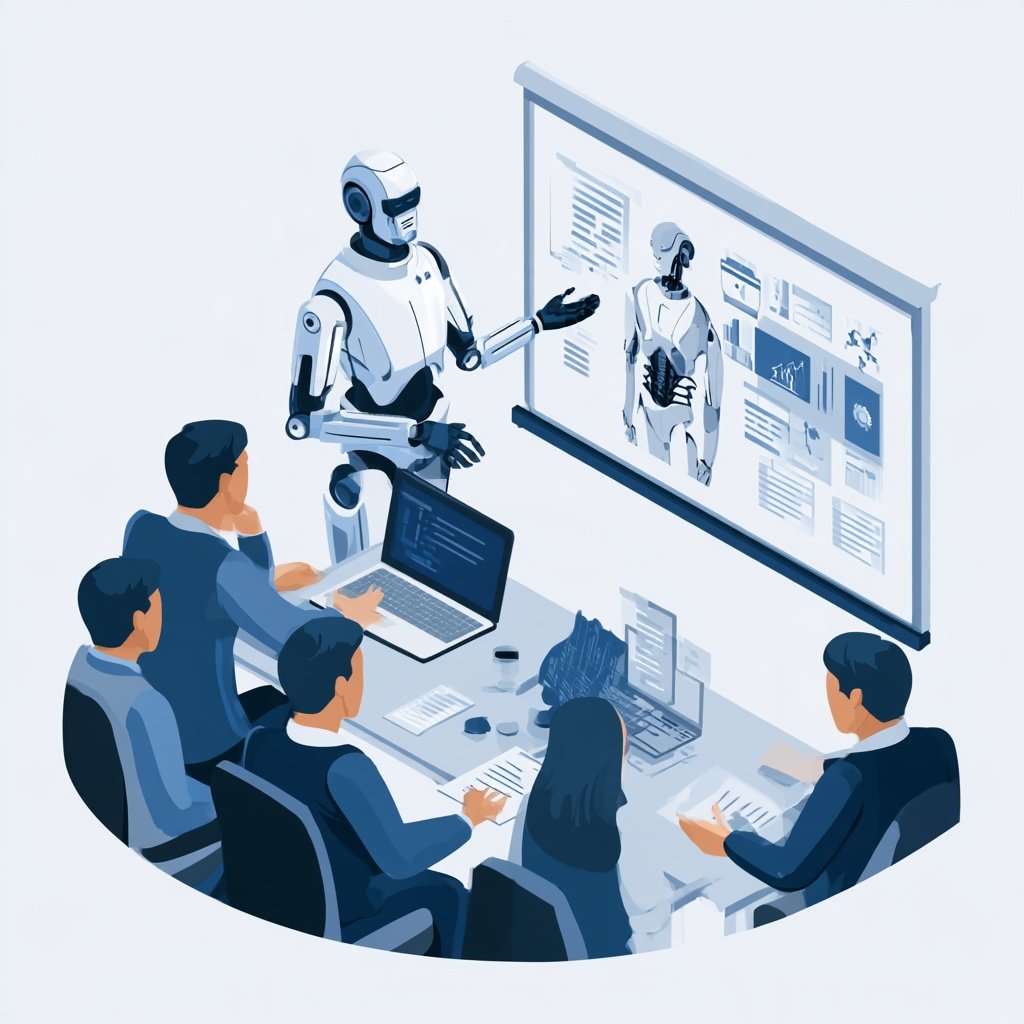

Rolling out new AI tools without teaching people how to use them is like handing someone car keys and skipping the driving lessons. Most organizations are learning that lesson the hard way this year. A solid employee AI training program is quickly becoming the difference between AI that truly helps and AI that sits there half-used. This guide breaks down what is working in 2026 and what still needs fixing.
Why Employee AI Training Is Falling Behind Adoption
Usage is racing ahead of guidance almost everywhere you look. One recent survey found that fewer than one in five workers have been through any formal AI training program, which means most people are experimenting on their own with whatever habits that produces (Devlin Peck, 2026). Another study found that fifty-eight percent of employees are teaching themselves about AI rather than learning it through their employer (D2L, 2026). That gap is not just inefficient. It creates real risk, since untrained employees are far more likely to paste sensitive information into a tool without thinking twice about where that data ends up. State-level AI governance laws are also starting to require documented training on AI risks in several regions, which raises the stakes for companies that have skipped formal programs so far (Relatones, 2026).
What a Strong AI Training Program Should Cover
The best programs skip the abstract theory and go straight to workplace tasks. That means covering prompting basics, writing workflows, research habits, spreadsheet work, meeting notes, and clear rules for handling client or customer data (Coursiv, 2026). Role-based paths matter too, since a sales rep and a finance analyst need very different skills from the same underlying tools. Programs that map AI capability to specific job functions tend to see faster, more consistent adoption than generic, one-size-fits-all training sessions rolled out to the whole company at once. Privacy and data handling deserve their own dedicated block of time, not just a single slide near the end of a session, since this is where the costliest mistakes tend to happen.
The Numbers Behind Employee AI Training ROI
The return on a well-built program is easier to measure than most training investments. Trained employees save roughly eleven hours a week compared to five hours for untrained employees using the same tools, and ninety-three percent of trained employees keep actively using AI compared to fifty-seven percent of untrained staff (Relatones, 2026). For a hundred-person company, that gap alone can translate into nearly a million dollars in yearly productivity gains. Formal programs also deliver a documented return of about three dollars and seventy cents for every dollar spent on training (Iternal, 2026). That kind of return is hard to ignore once finance sees the direct comparison.
Building Employee AI Training That People Keep Using
Short, frequent sessions beat long onboarding marathons that people forget within a week. Weekly forty-five-minute team sessions tend to drive higher adoption than isolated self-paced courses that employees complete once and never revisit (Iternal, 2026). Pair every session with hands-on practice, not passive video watching, since skills stick when people do the task themselves. Tie recognition to milestones such as certifications earned or skills applied on the job, since reinforcement is what turns a training program into a lasting habit rather than a one-time event everyone forgets by spring. Give managers the same training as their teams too, since a manager who cannot use the tools has a hard time coaching anyone else through them.
Employee AI training is not a nice-to-have anymore. It is quickly becoming the thing that decides whether your AI investment pays off or quietly becomes shelfware. Start small, measure what really changes, and expand once the results speak for themselves.
A Quick Checklist Before You Launch a Program
Confirm you have a role-based curriculum rather than one generic session for the whole company. Verify every session includes hands-on practice with real work, not just a slide walkthrough of features. Confirm you have a written policy on what data employees can and cannot paste into an AI tool, since this is the single most common source of costly mistakes. Verify managers get trained alongside their teams, not separately or later. Confirm you have a simple way to measure whether people keep using the tools after the first month. A program missing more than one of these pieces is worth pausing to fix before you roll it out any further.
References
Devlin Peck. (2026, July 27). 37 employee training statistics and trends for 2026. https://www.devlinpeck.com/content/employee-training-statistics
D2L. (2026, June 30). Employee training statistics and trends to know in 2026. https://www.d2l.com/blog/employee-training-statistics/
Coursiv. (2026, July 17). AI training for employees in 2026: A practical guide. https://coursiv.io/blog/ai-training-for-employees
Relatones. (2026, May 30). AI training for employees: The complete 2026 guide. https://relatones.com/resources/guides/ai-training-for-employees/
Iternal. (2026, July 12). AI training for employees (2026): Programs, costs & ROI. https://iternal.ai/ai-training-for-employees