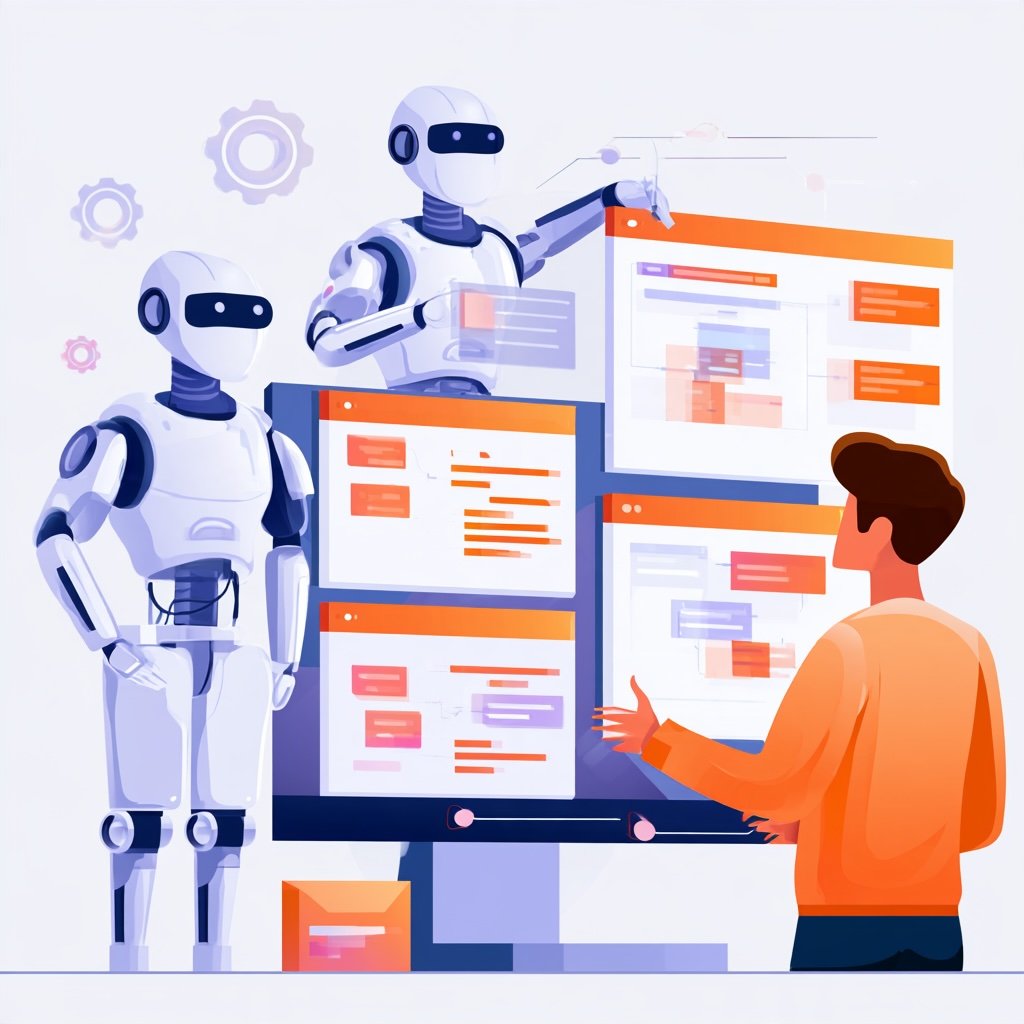

Software used to wait for a human to tell it what to do next. That is changing fast. Autonomous AI agents can now plan a task, carry it out across multiple tools, and check their own work with only light supervision. This shift is no longer science fiction. It is showing up in real companies right now, and it changes how teams think about risk, oversight, and what a job even looks like.
What Makes Autonomous AI Agents Different
A regular chatbot answers a question and stops there. An agent keeps going. It plans steps, calls tools, checks the result, and adjusts before handing anything back to a person. Research shows more than fifty seven percent of enterprises already run AI agents in some form of production today (Symphony Solutions, 2026). That number would have sounded absurd two years ago. The core loop behind most of these systems is simple in theory. Gather context, take an action, verify the result, then repeat until the task is finished (Prosus, 2026). The complexity lives in how well each phase is built, not in the loop itself. That loop sounds almost too simple to matter, yet the quality of each step is what separates a reliable agent from an expensive experiment that quietly fails in production.
The Risk That Comes With Autonomy
Giving software the ability to act on its own completely changes the risk profile. When a system can trigger workflows or move data without a human checking each step, mistakes scale much faster than they would with older automation. In 2026, an internal agent error at a major tech company briefly exposed sensitive data, which was a sharp reminder of how fragile a poorly governed agent system can be (Symphony Solutions, 2026). Research also suggests that eighty-eight percent of organizations have already experienced some AI-related security incident. Yet, only about twenty-two percent treat their agents as identity-bearing entities with real access controls.
Security teams are now treating identity for agents as seriously as identity for employees, since an agent with broad access is functionally similar to a new hire nobody vetted. Attackers increasingly target AI systems themselves as a new kind of attack surface too, which raises the stakes further (Palo Alto Networks, 2026). Treating an agent as just another automated script, rather than something with its own access and audit trail, is the mistake showing up again and again across recent incident reports. Budget for a proper access review before an agent ever touches a production system, not after something goes wrong.
Where Autonomous AI Agents Add Real Value
The best use cases right now involve long, tedious multi-step work that used to eat up a person’s whole afternoon. Coding agents that explore a codebase, make changes, and verify their own work are quickly becoming standard on engineering teams (Medium, 2026). Research assistants that gather sources, summarize findings, and flag gaps in a literature review save analysts hours of grunt work every week. The pattern across every strong use case is the same. Start with a task that has a clear definition of done, add checkpoints a human can review, and expand scope slowly as trust builds. None of this replaces human judgment on decisions that carry real consequences, and the strongest teams are careful about where that line sits.
Introducing Autonomous AI Agents Without the Chaos
Start with one narrow workflow and one clear owner before you let an agent touch anything customer-facing. Build in approval checkpoints for any action with financial, legal, or reputational stakes, and log everything the agent does so a human can trace back what happened when something goes sideways. Move toward broader autonomy gradually rather than flipping a switch for the whole organization at once. The teams getting this right treat autonomy as something earned step by step, not granted all at once on day one. Write down who is accountable if an agent makes a costly mistake before that mistake happens, not after.
Autonomous AI agents aren’t going away, and pretending otherwise just means your competitors will figure this out first. Build the guardrails now, while the stakes are still manageable. Slow, deliberate rollout beats a flashy demo every single time.
A Simple Way to Talk About This With Leadership
Executives often want a yes or no answer on whether agents are safe, and that framing sets everyone up to fail. A better question is where autonomy belongs this quarter and where a human still needs to sign off. Bring a short list of candidate workflows, ranked by how reversible a mistake would be, and start with the ones where a wrong move costs almost nothing to fix. That framing turns an abstract debate about trust into a concrete decision about sequencing, which is a conversation most leadership teams can move forward on in a single meeting.
References
Symphony Solutions. (2026, July 15). AI agents in 2026: The future of autonomous software. https://symphony-solutions.com/insights/ai-agents-in-2026
Prosus. (2026, February 26). State of AI agents 2026: Autonomy is here. https://www.prosus.com/news-insights/2026/state-of-ai-agents-2026-autonomy-is-here
Medium. (2026, June 17). The state of AI coding agents (2026): From pair programming to autonomous AI teams. https://medium.com/@dave-patten/the-state-of-ai-coding-agents-2026-from-pair-programming-to-autonomous-ai-teams-b11f2b39232a
Palo Alto Networks. (2026, June 15). 2026 predictions for autonomous AI. https://www.paloaltonetworks.com/blog/2025/11/2026-predictions-for-autonomous-ai/