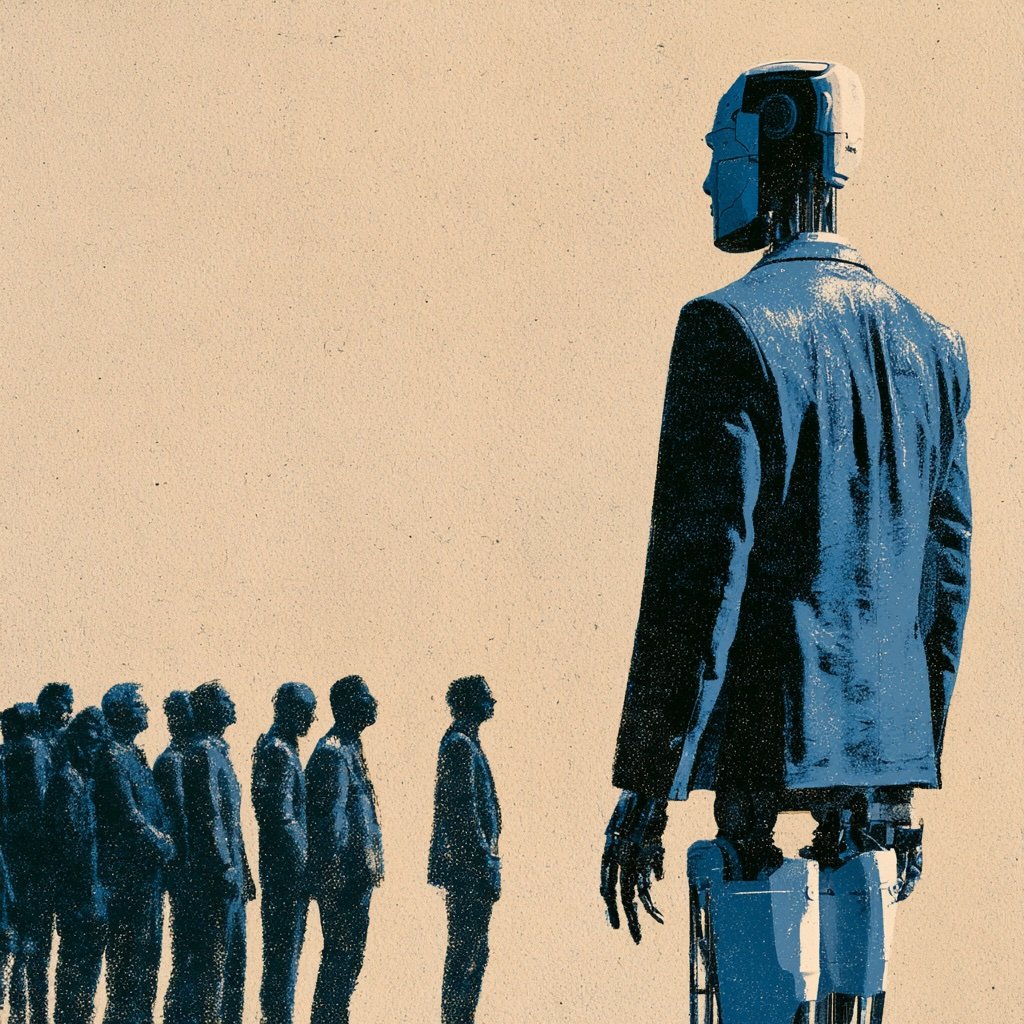

Layoffs tied to AI adoption have become a defining feature of this year’s corporate landscape, touching companies across nearly every industry. For leaders who must deliver the news and then keep a team functioning afterward, the challenge goes far beyond the announcement itself. Knowing how to lead through an AI layoff separates executives who preserve trust and momentum from those who watch morale and performance collapse in the months that follow. The stakes are high, since the people who remain are watching closely for signs of what kind of leader they are now working for.
What It Takes to Lead Through an AI Layoff Wave
The numbers tell a stark story. AI became the leading cited cause of layoffs in the first half of this year, accounting for over a hundred thousand job cuts and representing close to a quarter of all announced reductions during that period (eciks.org, 2026). Major companies across technology, banking, and semiconductors have all pointed to AI-driven restructuring as a factor in recent cuts.
Leaders who want to lead through an AI layoff well need to understand that these decisions are often made under real financial pressure to fund AI infrastructure, even as many of the same companies keep increasing their AI capital spending (eciks.org, 2026). Employees notice this tension, and pretending it does not exist only damages credibility further. The scale of this wave means most leadership teams will face this challenge at some point in the next few years, even if they have avoided it so far.
Why Rushed AI Layoffs Often Backfire
Several companies that moved quickly on AI-driven cuts have since reversed them. A recent industry report found that most employers who laid off staff for AI-related reasons later regretted the decision, and analysts expect a meaningful share of those companies to rehire for similar functions within a couple of years under different job titles (AltoPartners, 2026). This pattern, sometimes called the boomerang effect, shows how easy it is to overestimate what AI can replace in the short term.
Leaders who understand this history approach AI layoffs with more caution and better communication from the start. Framing every cut as purely an AI decision, when reality is more complicated, creates a credibility problem the moment the company quietly rehires for a similar role months later.
Practical Steps to Lead Through an AI Layoff
Training investment matters as much as the layoff decision itself. Organizations that achieve the strongest return on their AI investments consistently reinvest in their remaining workforce, upskilling people to build and manage AI tools rather than simply cutting and hoping the gap closes itself (AltoPartners, 2026). Leaders who skip this step often find productivity gaps reappearing within a year.
Communication needs to be direct about what changed and why, without hiding behind vague language about efficiency. Employees can tell the difference between a leader who explains a hard decision clearly and one who is reaching for a euphemism to avoid an uncomfortable conversation. Naming the real drivers, even when they involve cost pressure alongside AI adoption, builds more trust than a sanitized version of events.
Supporting the Team That Remains
Uncertainty spreads fast after any layoff, and remaining employees often carry a heavier workload while also worrying they could be next. Leaders cannot eliminate that fear, but they can shape how people experience the uncertainty through consistent updates, clear expectations, and visible support rather than silence. Regular check-ins during this period matter more than any single town hall announcement.
Career pipelines deserve particular attention. Heavy reliance on AI for entry-level and mid-level work can quietly damage a company’s future leadership pipeline if nobody is tracking the long-term effect on skill development. Leaders who lead through an AI layoff successfully keep an eye on this risk rather than treating the immediate cost savings as the only outcome that matters.
The organizations that come out ahead after this wave of change will likely be the ones led by people who treated their workforce as a long-term asset throughout the disruption, not just a line item to trim when AI promised a shortcut. Leaders who master how to lead through an AI layoff now will carry that skill forward into whatever the next wave of workplace change brings, since the underlying discipline of clear communication and real investment in people rarely goes out of style.
References
Eciks.org. (2026). Nearly 40 companies have laid off employees in 2026, with AI adoption driving widespread workforce reductions across tech, retail, and finance. https://eciks.org/14478-93865-employee-layoffs-2026-40-companies-ai
AltoPartners. (2026). The AI leadership conundrum: Why lay offs miss the mark. https://altopartners.com/news/2026-the-ai-leadership-conundrum-why-lay-offs-miss-the-mark
Fernández, S. (2026, January 29). Layoffs. Harvard Business Review. https://hbr.org/topic/subject/layoffs