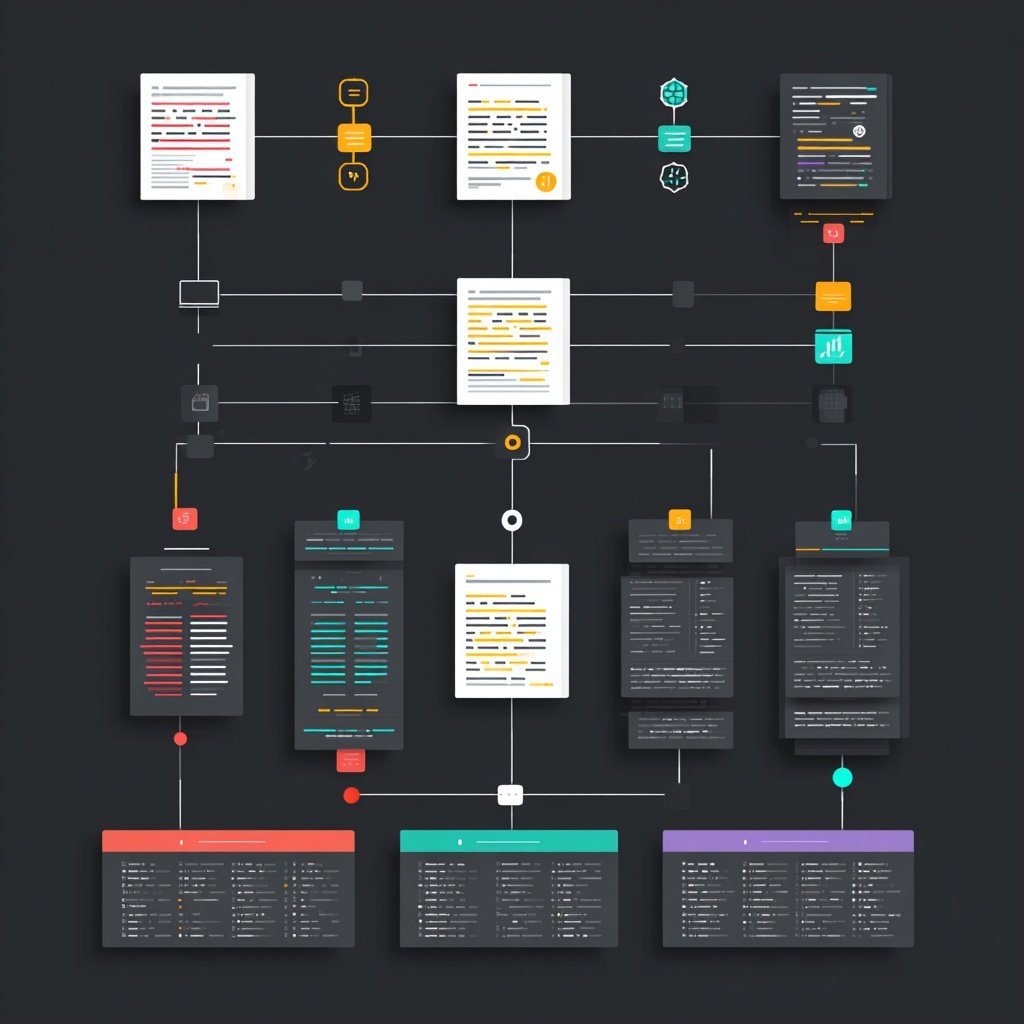

The world of AI is moving fast. Teams are building, deploying, and scaling AI systems at a relentless pace. Often, documentation gets left behind. That is where an AI documentation governance model is essential. It provides a shared framework for creating, reviewing, and maintaining technical documentation. It reduces confusion, builds trust, and keeps stakeholders aligned. Without this, organizations risk inconsistent records, compliance gaps, and systems that nobody can explain. These are serious problems when regulators and auditors come knocking.
With this context in mind, let us dig into what this model looks like, why it matters, and how your team can start building one today.
Why Documentation Is the Foundation of Responsible AI
Good AI systems are not just about clean code and clever algorithms. They depend on clear, accurate, and current documentation. Consequently, when documentation falls short, even the best-engineered model can cause harm or confusion. Researchers have found that transparency in AI systems starts with how teams document their design decisions across the full development lifecycle (Agarwal & Nene, 2025). Furthermore, documentation serves as the institutional memory of an AI project. When team members leave or roles shift, documentation is what keeps the project coherent. Without that foundation, knowledge evaporates, and errors multiply.
Treating documentation as a first-class deliverable is a core responsibility. Teams that invest early avoid significant difficulties later. Regulatory bodies around the world increasingly require detailed technical documentation. The EU AI Act, for example, mandates thorough documentation for high-risk AI systems (European Parliament, 2024). This regulatory pressure alone is reason enough to get organized now.
What an AI Documentation Governance Model Really Means
An AI documentation governance model is a structured approach to managing the creation, maintenance, approval, and archiving of documentation throughout the lifecycle of an AI system. Think of it as a set of shared rules and responsibilities. Specifically, it defines who writes documentation, who reviews it, and who has the authority to approve it. It also establishes standards for format, depth, and update frequency.
Governance models are not one-size-fits-all. A small startup has different needs from a hospital deploying a diagnostic AI tool, but both need fitting governance structures. The National Institute of Standards and Technology highlights this in its AI Risk Management Framework, encouraging organizations to align documentation practices with the risk level of their AI applications (NIST, 2023). Higher-risk systems require stricter governance, while lower-risk ones can take a lighter approach.
Additionally, a governance model controls versioning. AI models and datasets change. Documentation must keep pace, and the governance model maintains order in updates.mentation Governance
Strong governance rests on a few key pillars. First, there is ownership. Someone must be clearly responsible for each document. Without that clarity, documentation gets stale, and nobody feels accountable. Second, there is standardization. Teams need agreed-upon templates and formats so that documentation is consistent and comparable across projects. Third, there is a review process. Documents should undergo structured review cycles that involve both technical and non-technical stakeholders.
Beyond those basics, metadata matters. Every document should record when it was created, who created it, what version of the model it describes, and when it was last updated. The MIT AI Risk Initiative has emphasized that structured, traceable documentation records are central to any credible governance landscape (Mylius et al., 2026). Their recent mapping work makes clear that fragmented documentation remains a major gap across the AI governance ecosystem. Furthermore, traceability is essential. Teams should be able to connect any documented decision back to a specific model version or dataset snapshot.
The AI Documentation Governance Model and Regulatory Pressure
Regulation is no longer a distant concern. Governments and standards bodies are moving quickly to mandate accountability in AI systems. As a result, organizations without an AI documentation governance model face increasing legal and reputational risk. The EU AI Act, effective in 2024, requires providers of high-risk AI systems to maintain comprehensive technical documentation, which is available to national supervisory authorities upon request (European Parliament, 2024).
Similarly, NIST’s AI Risk Management Framework encourages organizations to document their AI systems thoroughly as part of responsible risk management (NIST, 2023). These frameworks are not just bureaucratic checklists. They reflect a shift in how society expects AI to be governed. The Partnership on AI has identified documentation and transparency as top priorities for AI governance in 2026. They note that gaps remain in how documentation connects across the value chain (Partnership on AI, 2026). Governance models must evolve alongside the technology.
The major takeaway: building governance structures now puts teams ahead when compliance deadlines arrive, avoiding costly mistakes.
Common Pitfalls Teams Run Into Without a Governance Structure
Many teams discover the value of documentation. Many teams learn the value of governance the hard way. Without it, documentation is quickly outdated because no one owns updates. Teams may describe the same system differently. Auditors may find missing or unlocatable records. Onboarding drags out when documentation is scattered and unreliable. The station’s quality is uneven. Some engineers write thorough records; others write almost nothing. That inconsistency creates blind spots. Additionally, in regulated industries such as healthcare or finance, inconsistent documentation can directly lead to compliance violations. Therefore, the cost of ignoring governance is not just operational friction. It can translate into legal liability, failed audits, and damaged trust with users and partners. The sooner teams recognize this, the sooner they can act.
Building the AI Documentation Governance Model Into Your Workflow
The good news is that integrating governance into existing workflows need not be disruptive. Rather, it works best when it is embedded into the processes teams already follow. For example, documentation checkpoints can be added to sprint reviews, model evaluation milestones, and deployment approvals. That way, governance becomes a natural part of the development cycle rather than an afterthought.
Tools matter too. Version control systems, collaborative documentation platforms, and metadata tagging systems all support a governance model when configured correctly. Furthermore, teams benefit from designating a documentation lead for each project. This person does not write everything, but they do coordinate, review, and maintain standards. Agarwal and Nene (2025) proposed a layered framework for AI governance that clarifies exactly how high-level regulatory requirements can be translated into operational documentation practices. Their approach serves as a practical reference point for any team building its own governance structure. Starting with clear layers and defined responsibilities significantly lowers the barrier to consistent documentation.
Growing a Documentation Culture Across Your Organization
Technology and process are only part of the solution. Culture matters as much. Teams that view documentation as a burden struggle to maintain it. Teams that see documentation as care for colleagues and users excel.When technical leaders model good documentation habits and recognize team members who contribute to strong records, the culture shifts. Furthermore, organizations can reinforce this by including documentation quality in performance reviews and project retrospectives. Training helps too. Many engineers were never explicitly taught how to document AI systems. Offering workshops or internal guides gives people the skills and confidence to contribute meaningfully. Over time, good documentation becomes a point of professional pride rather than a box to check.
Research underscores the urgency. By the end of 2025, AI governance had shifted from an aspirational practice to an enterprise requirement, with significant legal and financial consequences for organizations that fell short (Talby, 2026). That shift makes culture-building not just a nice-to-have, but necessary.
Moving Forward With Your AI Documentation Governance Model
The main takeaway is that consistent commitment to AI documentation governance delivers compounding benefits: improved quality, easier compliance, faster onboarding, and stronger stakeholder trust.
Start small if you need to. Pick one project, define ownership, establish a template, and build from there. Then expand the model as your team gains confidence. The important thing is to start. AI systems are only going to become more central to how organizations operate, and the documentation that supports them needs to keep pace. With a clear governance model in place, your team is ready for whatever comes next.
References
Agarwal, A., & Nene, M. J. (2025). A five-layer framework for AI governance: integrating regulation, standards, and certification. arXiv. https://doi.org/10.48550/arXiv.2509.11332
European Parliament. (2024). EU Artificial Intelligence Act. https://www.europarl.europa.eu/topics/en/article/20230601STO93804/eu-ai-act-first-regulation-on-artificial-intelligence
Mylius, S., Slattery, P., Zhu, Y., Narayanan, M., Thinnyun, A., Gharia, S., Muhaj, D., Hung, B., Snorovikhina, V., Saeri, A., Graham, J., Noetel, M., & Thompson, N. (2026). Mapping the AI governance landscape: April 2026 update. MIT AI Risk Initiative. https://airisk.mit.edu/blog/mapping-the-ai-governance-landscape-april-2026-update
National Institute of Standards and Technology. (2023). Artificial Intelligence Risk Management Framework (AI RMF 1.0). https://doi.org/10.6028/NIST.AI.100-1
Partnership on AI. (2026). Six AI governance priorities for 2026. https://partnershiponai.org/resource/six-ai-governance-priorities/
Talby, D. (2026, February 4). AI governance in 2026: Is your organization ready? Dataversity. https://www.dataversity.net/articles/ai-governance-in-2026-is-your-organization-ready/