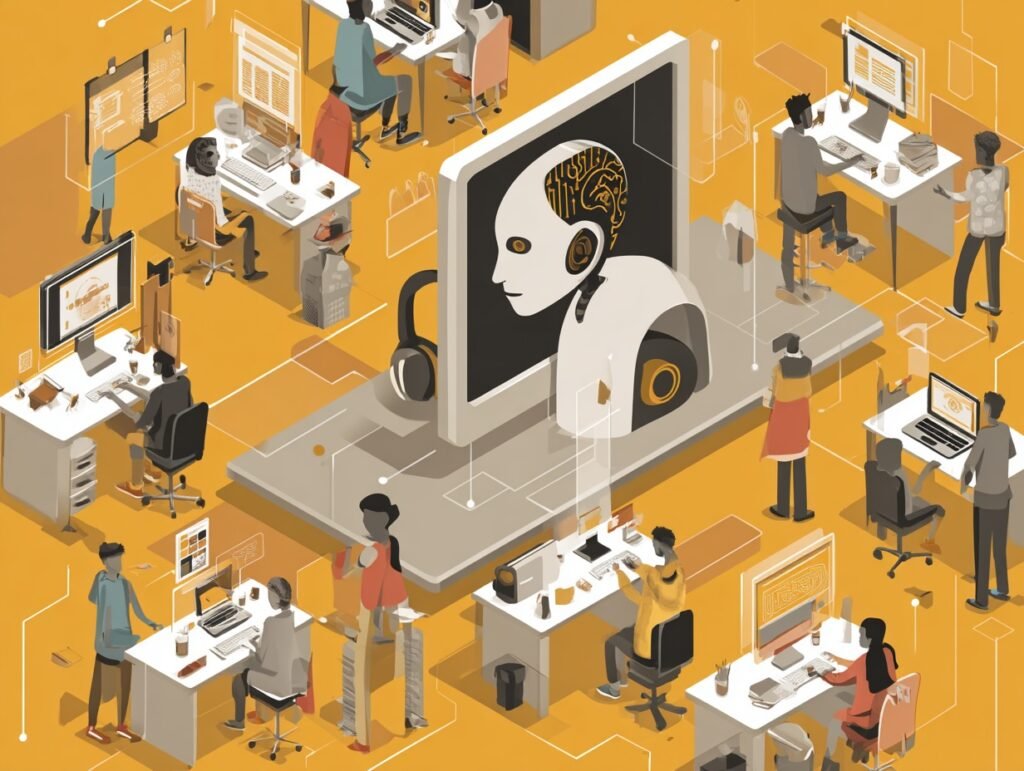

Software teams are moving fast. AI systems are no longer confined to research labs—they are now live, customer-facing, and mission-critical. The stakes for reliability are higher than ever. AI reliability engineering ensures these systems behave consistently and predictably. This discipline is redefining trustworthy software today. Key takeaways: AI reliability engineering enables dependable AI, is essential for modern software, and every engineer and leader should understand its basics. Let us break down what it is, why it matters, and how teams can take it seriously.
Having established the context, we can now ask: what exactly is AI reliability engineering?
AI reliability engineering is the systematic practice of designing, operating, and maintaining AI software systems to ensure long-term dependability. It specifically addresses issues beyond traditional software reliability. In classical software, reliability is defined as consistent and correct program execution, where failure modes are predictable and repeatable—bugs generate the same incorrect output, posing mainly a debugging challenge. In contrast, AI system reliability refers to the system’s sustained performance and trustworthy outputs under changing conditions. Such systems may degrade gradually and subtly, shifting behavior as data evolves, and generating outputs that are difficult to detect as incorrect (Tewari, 2025).
Engineers need new mental models, monitoring strategies, and processes to ensure system health. The field synthesizes software engineering, statistical modeling, and systems safety thinking. These perspectives together guide the creation of trustworthy AI software. Key takeaways: Adapting new mindsets and methods is crucial, and cross-disciplinary approaches help maintain trust and reliability in AI systems.
Why Traditional Reliability Practices Fall Short
Traditional Site Reliability Engineering was built for deterministic systems. Teams set service-level objectives, define error budgets, and monitor uptime and latency. Alerting was straightforward because failures were usually sudden and clear. However, AI systems challenge most of these assumptions.
As Malik (2025) explained, when a system learns and adapts continuously, traditional reliability metrics no longer capture what is truly going wrong. Input distributions shift without warning. Model weights drift with each retraining cycle. Predictions steadily worsen without ever triggering a single monitoring alert. Furthermore, operational dependencies now include data pipelines, feature stores, and retraining schedules that traditional reliability engineering was never designed to manage. Therefore, teams need a fundamentally different approach and a broader definition of what reliability even means in this context. Key takeaway: AI reliability needs novel approaches, metrics, and expanded operational focus.
Model Drift and the Silent Failure of AI Systems
Model drift is one of the defining challenges in AI reliability engineering. It occurs when the data a model encounters in production diverges significantly from the data it was originally trained on. As a result, prediction quality degrades gradually over time. Moreover, there is a subtler and often more dangerous variant called concept drift. This happens when the meaning of the patterns in the data changes, even if the surface-level distribution appears similar. Therefore, a model that once performed well can begin failing without producing any obvious technical error signal.
Faddi et al. (2024) demonstrated that even small perturbations to input data can significantly degrade the performance of classification systems in production. Consequently, continuous behavioral monitoring of AI models is not a nice-to-have feature. Instead, it is a core engineering responsibility. Furthermore, this kind of monitoring requires purpose-built tooling, not just repurposed infrastructure dashboards or generic alerting rules. Key takeaway: Dedicated monitoring tools are vital for catching AI model degradation.
Core Principles of Strong AI Reliability Engineering
Several principles define mature AI reliability engineering. Observability must go far beyond basic uptime metrics; it should include real-time monitoring of input data integrity, statistical measurements of prediction confidence intervals, and continuous tracking of feature drift. Testing should encompass adversarial input resistance and robustness to distribution shift, not just routine unit and integration tests. AI systems also require explicit, predefined fallback mechanisms built in from the start.
If a model behaves unexpectedly, the system must be able to safely degrade to a known-good or rule-based state. Additionally, retraining pipelines are now part of the reliability surface and must be treated accordingly. A delayed or failed retraining run can silently cascade into model degradation over days or weeks. Abbas et al. (2025) found that DevOps integration challenges are among the most significant barriers to reliability in AI-enhanced engineering environments. Therefore, ML pipelines deserve the same operational rigor, documentation, and incident response coverage as any production service.
Team Structure and Shared Ownership
Building reliable AI systems is not only a technical challenge. It is also deeply an organizational one. Furthermore, good reliability requires tight and ongoing collaboration across multiple disciplines. Data engineers, ML researchers, infrastructure engineers, and reliability engineers all need to share real ownership of the same system. However, traditional team structures often keep these groups siloed from one another. As a result, critical handoffs between teams frequently get missed.
For instance, who is responsible when a feature store begins serving stale data? Who owns model validation before each new version goes live in production? Malik (2025) emphasized that shared runbooks and clear responsibilities must extend across the entire ML pipeline, not just the runtime infrastructure layer. Moreover, incident response procedures and dashboards should cover model behavior alongside infrastructure health. Therefore, teams that invest in cross-functional ownership structures early will be far better prepared when failures eventually occur.
Measuring the Right Things in AI Systems
Measurement is central to any reliability practice, but AI systems demand different metrics. Uptime percentages reveal little about the reliability of outputs. Engineers should track prediction drift, data freshness, and confidence calibration as a baseline.
Additionally, error analysis should go beyond raw failure counts and rates. It should examine which input types and data segments are most prone to misprediction over time. Service-level objectives should also be extended to account for model performance, not only infrastructure health. Tewari (2025) highlighted the importance of sophisticated AI methods in closing the gap between theoretical reliability frameworks and real-world system evaluation. Therefore, teams should revisit their full metrics strategy whenever a new model is promoted to production. Moreover, the metrics you choose will directly shape how quickly you can detect and recover from reliability issues before they reach end users. Key takeaway: Continuously refine metrics and error analysis to proactively address emerging reliability issues.
The Road Ahead for AI Reliability Engineering
AI reliability engineering is growing fast as both a field and a profession. Nevertheless, it remains far from fully mature. As AI systems become more capable and more deeply embedded in critical infrastructure and consumer services, the bar for reliability will only continue to rise. Furthermore, regulatory attention is increasing rapidly across jurisdictions worldwide. The International AI Safety Report (2025) noted that as AI capabilities accelerate, policymakers and engineers alike will face growing pressure to demonstrate that their systems are genuinely safe and trustworthy in practice.
Building strong reliability cultures and engineering practices now is a strategic investment, not only a technical concern. Teams that develop this capability early will be better positioned as standards and regulations tighten. Tools available to practitioners are improving quickly. Open-source observability platforms, MLOps frameworks, and purpose-built model-monitoring solutions are all maturing rapidly. There is no reason to delay—the time to build serious AI reliability engineering capabilities is now, before the next major failure makes it urgent.
References
Abbas, M. Z., Guo, Z., Shah, A., & Ali, S. (2025). Enhancing software engineering with AI: Innovations, challenges, and future directions. IET Software. https://ietresearch.onlinelibrary.wiley.com/doi/full/10.1049/sfw2/5691460
Faddi, Z., da Mata, K., Silva, P., Nagaraju, V., Ghosh, S., Kul, G., & Fiondella, L. (2024). Quantitative assessment of machine learning reliability and resilience. Risk Analysis. https://arxiv.org/pdf/2502.12386
International AI Safety Report. (2025). International AI safety report 2025. https://internationalaisafetyreport.org/publication/international-ai-safety-report-2025
Malik, M. Y. (2025, November 19). SRE in the age of AI: What reliability looks like when systems learn. DevOps.com. https://devops.com/sre-in-the-age-of-ai-what-reliability-looks-like-when-systems-learn/
Tewari, A. (2025). Software reliability intensification: Artificial intelligence outlook. Journal of Computer Science Engineering and Software Testing, 11(1), 39–59. https://matjournals.net/engineering/index.php/JOCSES/article/view/1531