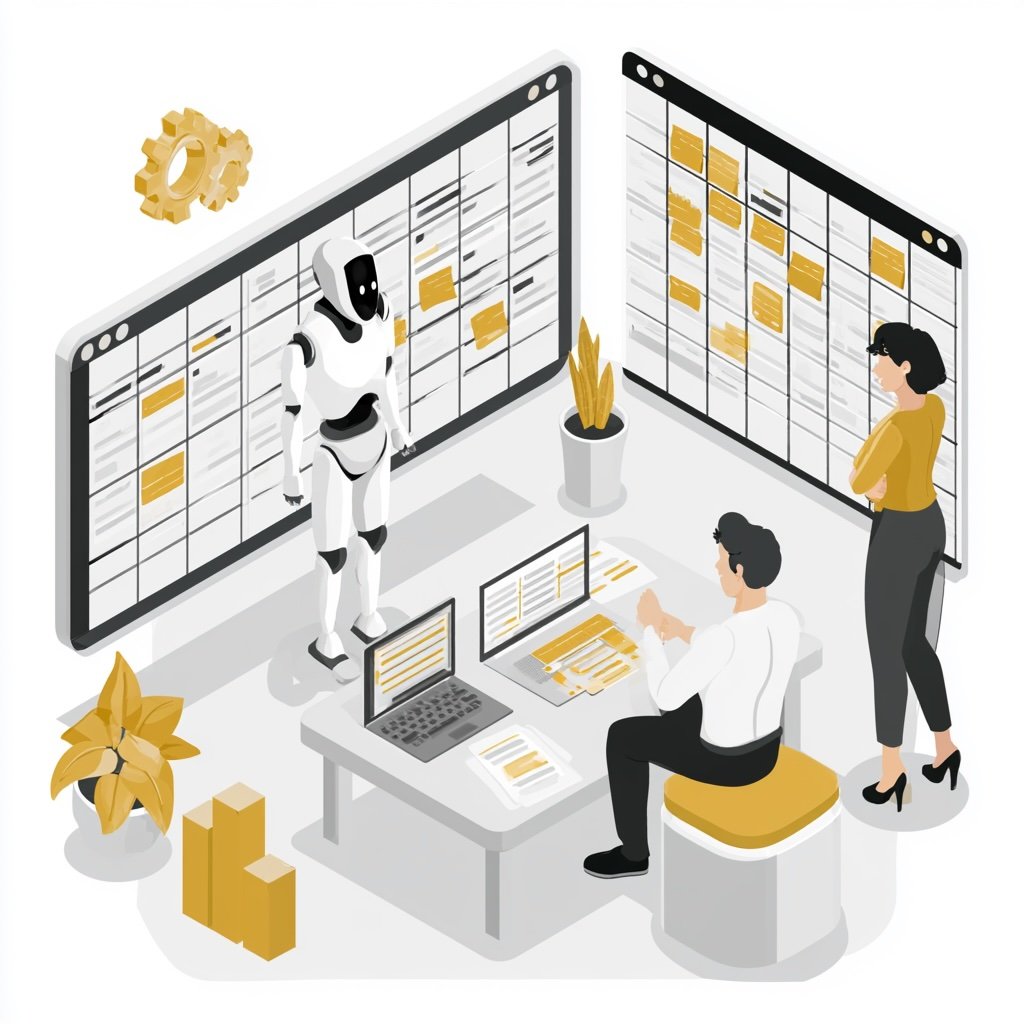

AI for Sprint Planning solves one of the most persistent headaches in agile software development: the simple fact that velocity estimates are usually somewhere between an educated guess and a hopeful number pulled from thin air. Scrum teams have relied on planning poker, gut instinct, and historical averages for years, and all three methods leave significant room for error. As more project management tools integrate machine learning directly into sprint planning workflows, teams finally have a path toward estimates grounded in real patterns rather than whoever argues most persuasively in the room that day.
Why Traditional Velocity Estimation Falls Short
Traditional velocity estimation methods share a common weakness: they rely heavily on human memory and intuition rather than systematic analysis of historical data. Planning poker captures the team’s collective gut feeling that day, which varies with mood and who happens to speak first. Historical averages smooth out some noise but typically fail to account for changing team composition or shifting technical debt. Consequently, sprint commitments frequently miss the mark, leading to underdelivery that damages stakeholder trust or sandbagged estimates that undersell what the team could genuinely accomplish, given an honest read of its current capacity and workload.
How AI for Sprint Planning Works in Practice
Modern AI sprint planning tools analyze historical ticket data, including story point estimates, actual completion times, and team composition changes, to generate velocity predictions grounded in real patterns rather than memory. These systems account for variables that a human planner would struggle to track manually, such as dips in velocity after a team member’s vacation. Many tools now also use natural language processing to analyze ticket descriptions themselves, flagging tickets that historically correlate with scope creep. This data-driven approach does not eliminate uncertainty, but it grounds the conversation in evidence rather than pure intuition or whoever happens to sound most confident in the room that particular afternoon.
Common Mistakes Teams Make With AI for Sprint Planning
The most common mistake is treating AI-generated velocity estimates as infallible predictions rather than informed starting points for discussion. No model can fully account for a major architectural change mid-sprint or an unexpected production incident. Teams sometimes feed the tool dirty historical data without cleaning it first, producing confidently wrong predictions that erode trust quickly. Another frequent error involves ignoring team-specific context that a model cannot see, such as a new hire still ramping up or a known difficult dependency on another team. Successful adoption treats AI output as one input among several rather than a final answer handed down from above without room for discussion.
Measuring Whether the Tool Is Helping Your Team
Track your sprint commitment accuracy before and after adopting AI-assisted velocity estimation to see whether the tool genuinely improves your team’s outcomes. Look beyond simple accuracy, too, since a tool that produces more productive planning conversations still delivers real value even with imperfect predictions. Watch for changes in planning meeting length, since one underappreciated benefit of AI for Sprint Planning is that data-grounded discussions tend to resolve disagreements faster than opinion-based debates that drag on without a clear resolution. If both accuracy and efficiency improve over several sprints, the tool clearly fits your workflow well.
Where Sprint Planning Automation Is Headed
Looking ahead, expect AI for Sprint Planning to become increasingly integrated into mainstream project management platforms rather than requiring specialized tools. As these capabilities mature, the barrier to adoption will keep falling, much like automated testing became standard practice over the past decade. The goal has never been to remove human judgment from sprint planning entirely. It is grounding that judgment in evidence so teams can commit to sprints with genuine confidence rather than hopeful guesswork dressed up as a number on a board.
References
Project Management Institute. (2024). AI readiness in project management, 2024 pulse of the profession. https://www.pmi.org/learning/library/ai-readiness-project-management
Gartner. (2025). AI project delivery best practices for enterprise teams. Gartner Research. https://www.gartner.com/en/information-technology
McKinsey & Company. (2025). The state of AI in 2025. McKinsey Global Institute. https://www.mckinsey.com/capabilities/quantumblack/our-insights/the-state-of-ai