
What Is AI Data Pipeline Optimization and Why Does It Matter?
Data is everywhere. It flows from databases, sensors, APIs, and social media feeds at a pace that traditional systems struggle to keep up with. That is precisely why AI data pipeline optimization has become one of the most important topics in modern technology. Simply put, it refers to using artificial intelligence to improve the speed, accuracy, and efficiency of how data moves through an organization’s infrastructure. Furthermore, as businesses become increasingly dependent on real-time insights, the need for smarter, faster pipelines has never been greater.
Traditional data pipelines were built for a slower era. They could manage scheduled batch jobs reasonably well. However, when faced with today’s scale and speed, these pipelines often fall short. Thus, organizations are turning to AI-driven approaches that automate complex tasks, detect anomalies, and continuously self-optimize. This shift goes beyond speed; it’s about building systems that learn and adapt, delivering better results over time (Agarwal, 2024).
The Building Blocks of a Modern AI Pipeline
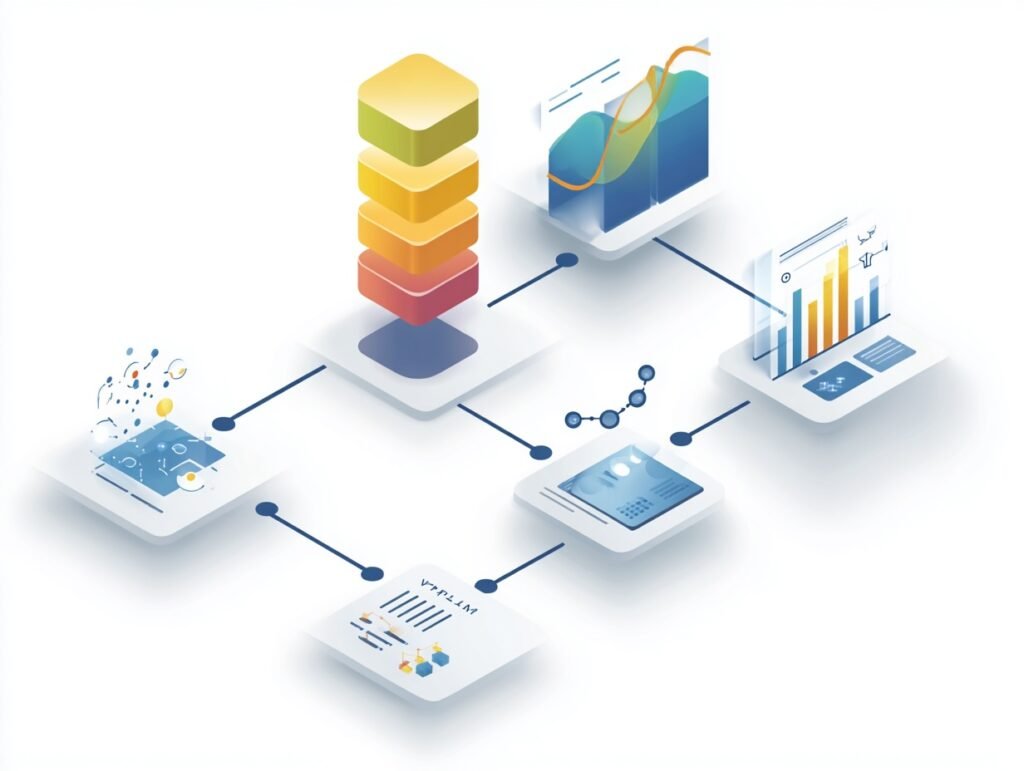
Before exploring optimization strategies, it helps to understand the core stages at work in a modern pipeline. The process begins with data ingestion, which involves pulling raw information from sources such as transactional databases, IoT sensors, and third-party APIs. After ingestion, the data is cleaned and transformed into a usable format. Then, machine learning models are integrated to generate predictions and surface insights. Finally, results are stored, monitored, and used to inform business decisions.
Each of these stages presents its own challenges. Nevertheless, AI tools are steadily making them easier to manage. For example, automated data validation tools can flag inconsistencies as they appear rather than after the fact. In addition, machine learning algorithms can prioritize which data gets processed first based on business value. In this way, pipelines become more intelligent with every cycle (Sambath Narayanan, 2025a). This kind of incremental learning is what separates a modern AI pipeline from its rule-based predecessors.
Why Automation Is at the Heart of AI Data Pipeline Optimization
Automation is the engine that drives AI data pipeline optimization forward. Without it, engineers spend enormous amounts of time on repetitive, manual tasks. For instance, data cleaning alone can consume up to 80% of a data scientist’s working hours. That represents a significant drag on productivity. By automating these tasks, organizations free up human talent for higher-value strategic work.
Generative AI is now entering the pipeline space in a meaningful way. Researchers have found that large language models, when combined with reinforcement learning, can identify optimal pipeline configurations without human input. Furthermore, these systems can dynamically adjust resource usage in response to changing data conditions (Sambath Narayanan, 2025a). That kind of adaptability would have been difficult to achieve with older, rigid systems.
Beyond automation, intelligent orchestration tools such as Apache Airflow, Prefect, and Kubeflow Pipelines are making it easier for teams to manage complex workflows. These tools enable pipelines to be version-controlled, monitored, and reproduced consistently. In addition, they reduce the risk of silent failures, which can corrupt entire datasets before anyone notices. As more organizations adopt these tools, the standard for what a pipeline can achieve continues to rise (Yang et al., 2025).
Real-Time Processing and Latency Reduction
Real-time data processing is no longer a luxury. Instead, it is a necessity in industries such as finance, healthcare, and e-commerce, where decisions often need to happen within milliseconds. Accordingly, the infrastructure supporting these pipelines must be built for both speed and resilience.
Latency is one of the biggest challenges in real-time processing. Fortunately, several techniques have emerged to tackle it head-on. In-memory processing significantly reduces the time data spends waiting to be accessed. Additionally, using efficient data formats and minimizing serialization overhead can shave precious milliseconds off processing times. Distributed frameworks like Apache Flink and Apache Storm help further by parallelizing computations across multiple machines (Zaharia, 2025).
Stream processing is also gaining ground as IoT devices generate more data than ever before. Rather than waiting for a full data batch to accumulate, stream processing enables analysis of information the moment it arrives. This approach pairs well with AI models that continuously update their predictions. Together, these technologies allow organizations to respond to events faster than older batch-based approaches ever permitted.
Challenges That Come With AI-Powered Pipelines
AI-optimized pipelines face challenges. Data quality is among the most common issues: AI models rely on high-quality data, and poor quality undermines predictions. Robust validation and transformation layers are crucial to the effectiveness of the pipeline (Agarwal, 2024).
Model drift is another concern teams must proactively manage. As business environments evolve, the patterns a model learned during training may no longer hold true. Consequently, continuous retraining and validation against fresh data are essential practices. Furthermore, maintaining sophisticated AI-powered pipelines can be costly. Infrastructure expenses and the need for specialized talent both add to the operational burden over time.
Regulatory compliance adds yet another layer of complexity. Privacy laws around the world are becoming increasingly stringent. Organizations must therefore ensure their pipelines handle data responsibly and transparently. Federated learning is gaining traction as one promising solution. It allows AI models to train on distributed data sources without centralizing raw information. This approach helps organizations balance strong performance with genuine data privacy.
The Growing Role of Generative AI in Pipeline Design
Generative AI is reshaping how engineers think about pipeline architecture. Rather than manually configuring each component, teams can now describe their requirements in plain language. The AI then suggests or even constructs an appropriate pipeline structure. This is a significant step forward for both speed and accessibility.
Researchers have demonstrated that generative AI frameworks can autonomously analyze, design, and optimize data pipelines while improving overall analytical performance. These systems use large language models alongside reinforcement learning to test different configurations and select the most efficient ones (Sambath Narayanan, 2025a). Over time, they develop a kind of institutional memory, learning from past runs to make better decisions going forward.
Moreover, the shift toward declarative pipelines is gaining momentum in large-scale machine learning services. A declarative approach lets engineers specify what they want a pipeline to accomplish rather than detailing how it should do so. This abstraction simplifies development and enables greater automation throughout. As Yang et al. (2025) note, this model aligns well with modern workflow-as-code systems. It also reduces the cognitive load on engineering teams who are already stretched thin.
Responsible and ethical pipeline design is becoming a core concern alongside performance. Building transparent, accountable data flows is increasingly important as AI-driven decisions affect more aspects of people’s lives (Sambath Narayanan, 2024).
What the Future Holds for AI Data Pipeline Optimization
Looking ahead, the future of AI data pipeline optimization is promising, though not without complexity. Autonomous pipelines are on the horizon. These systems would manage the entire data lifecycle independently, detecting anomalies, resolving issues, and optimizing performance without waiting for human intervention. While full autonomy is still developing, the foundational pieces are rapidly falling into place.
Edge computing will also play an increasingly important role in the next generation of pipelines. As data generation moves closer to its source, pipelines will need to process information at the edge rather than shipping everything to a central cloud. This shift will reduce latency, lower bandwidth costs, and enable faster decision-making in remote or resource-constrained environments.
At the same time, governance frameworks are becoming increasingly important. As AI-driven pipelines become embedded in critical business operations, the need for ethical guidelines and regulatory compliance will only intensify. Organizations that invest in governance now will be better positioned to scale responsibly in the years ahead. The teams that treat pipeline optimization as an ongoing discipline rather than a one-time project will be the ones best equipped for what comes next.
Wrapping It All Up
AI-powered data pipelines represent a fundamental shift in how organizations manage and extract value from information. From automating tedious data cleaning tasks to enabling real-time analytics across massive data streams, the impact is measurable and growing. Furthermore, advances in generative AI and declarative pipeline design are making these systems smarter and more accessible than ever before. In summary, optimized AI pipelines increase efficiency, speed, and accessibility, marking a major advance in data management.