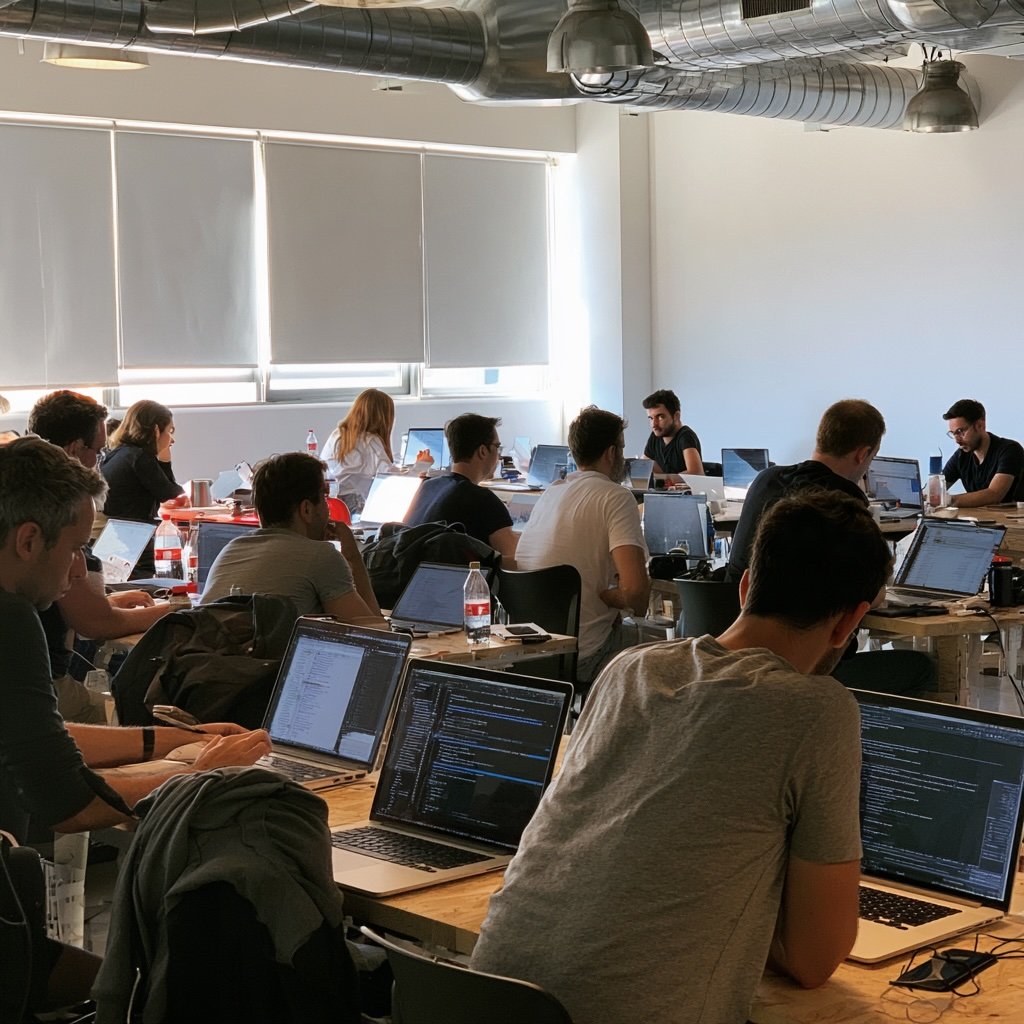

Ads for AI bootcamps seem to pop up everywhere lately. They promise new skills, better pay, and a fresh career in just a few months. Naturally, that sounds tempting. But are these programs worth your time and money? The answer depends on your goals, your background, and the program you choose. So let’s walk through the pros, the cons, and the questions to ask before you sign up.
Why AI Bootcamps Are Booming
Demand for AI skills is soaring. PwC (2026) analyzed more than one billion job ads and found that jobs requiring AI skills grew 69%, compared with 9% for the overall job market. Even better, the average wage premium for AI skills reached 62%. Numbers like these explain why so many people want a fast path into AI work.
At the same time, the skills employers want keep shifting. The World Economic Forum (2025) expects 39% of workers’ core skills to change by 2030. It also estimates that 59 out of every 100 workers will need training by then. Consequently, many professionals feel they must upskill quickly. Bootcamps step into that gap with short, focused programs.
What a Good Program Gives You
A strong bootcamp offers structure, which is hard to build on your own. You get a clear curriculum, deadlines, and instructors who answer questions. Moreover, you work on hands-on projects that you can show employers later. A portfolio of finished work often speaks louder than a certificate.
Community is another big benefit. Classmates push each other to keep going. Many programs also offer career coaching, resume reviews, and mock interviews. For career changers, that support can make a huge difference. Similarly, working professionals gain a quick way to add practical AI skills to their current role.
The Costs You Should Weigh
Of course, bootcamps are not cheap. Many charge thousands of dollars, and some run much higher. Beyond tuition, you also pay with your time. Full-time programs often require you to pause work, which means lost income. Even part-time programs demand many evenings and weekends.
You also have to ask about results. Some bootcamps publish job placement numbers that sound amazing but don’t explain their methods. Therefore, ask how they define a job, when they count it, and who audits the data. Additionally, remember that AI tools change fast. A program that taught last year’s tools may leave you behind next year. Asking these questions up front protects both your wallet and your career.
When AI Bootcamps Make Sense
Bootcamps tend to work best for certain people. For instance, if you already have a degree or work experience, a bootcamp can layer AI skills on top of what you know. That mix is powerful. According to PwC (2026), employers increasingly value human skills like judgment and leadership alongside AI know-how.
Likewise, bootcamps make sense if you learn best with structure and deadlines. Some people thrive when someone else sets the pace. Also, a bootcamp can help if your employer will cover the cost. In that case, the financial risk drops sharply. Meanwhile, you gain skills that help you right away in your current job.
When to Skip It
On the other hand, a bootcamp may not be the right move for everyone. If you are just curious about AI, free courses and tutorials can teach you the basics first. That way, you can test your interest before spending a lot of money. Similarly, if your goal is advanced research or machine learning engineering at a top lab, a degree may serve you better.
Finally, consider your daily work. McKinsey & Company (2026) found that 80% of respondents say AI has improved their individual productivity. Many of those gains come from using tools on the job. So sometimes the best training is simply using AI every day on everyday tasks. Practice, curiosity, and a few good online courses can take you surprisingly far.
So, Are AI Bootcamps Worth It?
The short answer is yes, sometimes. AI bootcamps are worth it when they match your goals, offer transparent results, and teach skills employers want today. They are less worthwhile when you choose them on hype alone. Before enrolling, research the curriculum, talk to former students, and compare costs with free options. With careful planning, a bootcamp can become a smart investment in your future rather than an expensive gamble.
References
McKinsey & Company. (2026). The state of AI in 2026: On the road to ROI. https://www.mckinsey.com/capabilities/quantumblack/our-insights/the-state-of-ai
PwC. (2026, June 15). AI reshapes global labour market into two distinct paths, rewarding human skills: PwC 2026 Global AI Jobs Barometer [Press release]. https://www.pwc.com/gx/en/news-room/press-releases/2026/pwc-2026-ai-jobs-barometer.html
World Economic Forum. (2025). The future of jobs report 2025. https://www.weforum.org/publications/the-future-of-jobs-report-2025/