
Why AI Is Changing Everything for Organizations
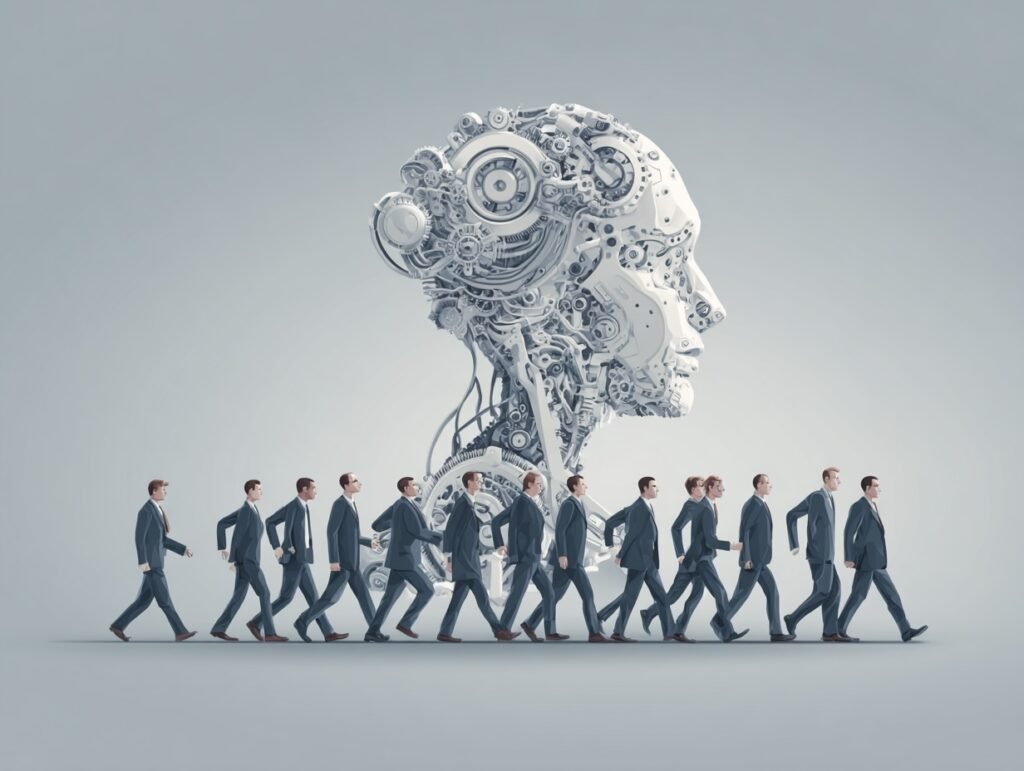
Artificial intelligence is fundamentally altering business operations. Leaders sense both urgency and opportunity. Creating a clear AI organizational strategy is essential. Without it, organizations face confusion, wasted resources, and frustrated employees. With the right plan, operations transform meaningfully and permanently. Research shows that companies with structured strategies achieve greater success with AI adoption (Brynjolfsson et al., 2023). The time to start is now. Strong groundwork makes all future steps easier.
Building the Foundation for Successful AI Change
Before any technology is deployed, organizations need solid groundwork. That groundwork begins with leadership alignment. When senior leaders share a unified vision, that clarity flows downward through the entire organization. Furthermore, alignment reduces the risk of conflicting messages that could confuse employees during an already uncertain transition. Cultural readiness is another critical component of the foundation. A culture that resists change will slow down even the best-designed AI initiative. Therefore, assessing cultural readiness before launching any program is a smart first step. McKinsey research shows that cultural and behavioral challenges consistently rank among the top barriers to AI adoption (McKinsey & Company, 2023). Building psychological safety in the workplace helps people approach AI with curiosity rather than fear. Moreover, trust in leadership becomes a powerful accelerator when it exists from the very start of the process.
Understanding Resistance to AI Organizational Change Strategy
Resistance to change is natural. People worry about job security, the relevance of their skills, and their daily routines being disrupted. These concerns deserve genuine respect and attention from leadership. Dismissing or minimizing resistance tends to deepen it over time. Instead, acknowledging fears openly creates space for productive conversation. Furthermore, involving employees early in the decision-making process dramatically reduces pushback. When people feel included, they become invested in the outcome rather than opposed to it. Research on organizational change confirms that participatory approaches significantly improve adoption rates (Davenport & Mittal, 2023). Frontline workers, in particular, hold valuable knowledge about daily operations. Their input can improve AI implementation in ways that top-down decisions often miss. Consequently, resistance is not always a problem to be eliminated. Sometimes it is a signal to listen more carefully and adjust the approach accordingly.
How to Communicate AI Change Effectively
Communication is the connective tissue of any successful change initiative. Leaders need a message that is clear, consistent, and repeated often across multiple channels. That message should explain why AI matters for the organization and what it means for each person’s role. Furthermore, communication must flow in both directions. When employees feel comfortable asking questions and sharing concerns, problems surface early enough to address them. Research strongly supports the view that two-way communication is a primary driver of successful organizational transformation (Brynjolfsson et al., 2023). Town halls, team briefings, and internal newsletters all help keep everyone informed and engaged. In addition, celebrating early wins publicly builds real momentum. Even small successes deserve recognition throughout the organization. Recognizing progress shows the workforce that the AI organizational change strategy is delivering tangible results. As a result, engagement and motivation tend to grow steadily over time.
Training and Reskilling for an AI-Ready Workforce
Technology does not transform companies—people do. Training and reskilling are key investments during AI transitions. Not everyone needs to be an AI expert, but all benefit from foundational AI knowledge. Tailored training outperforms generic programs. Employees learn best when content fits their roles. The World Economic Forum (2023) predicts that over 40% of core skills will change in the next 5 years due to AI. A culture of continuous learning is now essential. Invest in people to retain talent and adapt successfully.
Governance and Ethics in AI Adoption
Responsible AI adoption hinges on strong governance. Organizations need clear policies for AI usage, oversight, and decision review. Without frameworks, AI may introduce bias and compliance risks. Establishing AI ethics policies early protects both organizations and stakeholders. Transparency in AI decision-making is essential for building trust. When people understand AI’s rationale, they are more willing to accept its outcomes. Chui et al. (2023) found that strong governance leads to better long-term AI results. Governance must evolve as technology changes; what suffices today may falter tomorrow. Building flexibility and regular reviews into frameworks from the start is both practical and necessary.
Measuring the Impact of Your AI Organizational Change Strategy
Measurement turns intention into accountability. Organizations need clear metrics that directly link AI adoption to business outcomes. Tracking efficiency, cost savings, and customer satisfaction clearly demonstrates AI’s value. Yet numbers do not tell the whole story. Measuring employee sentiment and change readiness gives crucial context to the data. Combining both creates a fuller picture of progress. McKinsey research shows organizations using structured measurement frameworks adapt AI strategies faster and achieve stronger results (McKinsey & Company, 2023). Regular reporting keeps stakeholders engaged and builds momentum for the process. Seeing progress drives ongoing commitment. Consistent measurement turns the strategy into a dynamic plan that the organization can rally behind.
Sustaining AI Change Over the Long Term
Sustaining momentum is often harder than building it in the first place. Many organizations begin their AI journeys with energy and ambition, but lose focus after early implementation. Therefore, embedding AI into core processes, workflows, and decision-making structures from the start helps prevent momentum loss. Short-term thinking is one of the biggest risks to long-term transformation. Leaders must balance immediate wins with a longer-term vision that keeps the organization moving forward. Furthermore, as AI technology continues to evolve rapidly, strategies must evolve right alongside it. Rigidity quickly becomes a liability in fast-moving environments. Davenport and Mittal (2023) argue that organizations that treat AI as a continuous journey rather than a one-time project achieve significantly stronger outcomes over time. Adaptability, therefore, becomes a true strategic advantage. Organizations that build learning and flexibility into their operations are best positioned to thrive as AI capabilities continue to expand.
Bringing It All Together
Building a successful AI change initiative is a long-term commitment. It requires patience, leadership, courage, and deep respect for the people involved in the process. Organizations that take a human-centered approach to AI adoption consistently outperform those that focus purely on technology. Furthermore, communication, training, governance, and measurement all work together as an integrated system rather than isolated steps. No single component succeeds without the others working in parallel. The path forward is rarely perfectly smooth, but every challenge along the way offers a valuable learning opportunity. With the right mindset and a thoughtful plan, organizations can navigate AI transformation with real confidence. The stakes are high. However, so is the potential to create workplaces that are more efficient, more resilient, and more rewarding for everyone involved. The time to act with strategy and intention is right now.
A strong AI organizational change strategy starts at the top. Leaders who understand how to align culture, communicate clearly, and build AI-ready teams are the ones driving real transformation. If you are ready to go deeper, explore how executive leadership shapes every stage of the AI journey. Learn how AI executive leadership drives organizational change.
References
Brynjolfsson, E., Li, D., & Raymond, L. R. (2023). Generative AI at work. National Bureau of Economic Research. https://www.nber.org/papers/w31161
Chui, M., Hazan, E., Roberts, R., Singla, A., Smaje, K., Sukharevsky, A., Yee, L., & Zemmel, R. (2023). The economic potential of generative AI. McKinsey & Company. https://www.mckinsey.com/capabilities/mckinsey-digital/our-insights/the-economic-potential-of-generative-ai-the-next-productivity-frontier
Davenport, T. H., & Mittal, N. (2023). All-in on AI. Harvard Business Review Press. https://www.hbrpress.com/9781647824488/all-in-on-ai/
McKinsey & Company. (2023). The state of AI in 2023. https://www.mckinsey.com/capabilities/quantumblack/our-insights/the-state-of-ai-in-2023-generative-ais-breakout-year
World Economic Forum. (2023). Future of Jobs Report 2023. https://www.weforum.org/reports/the-future-of-jobs-report-2023/