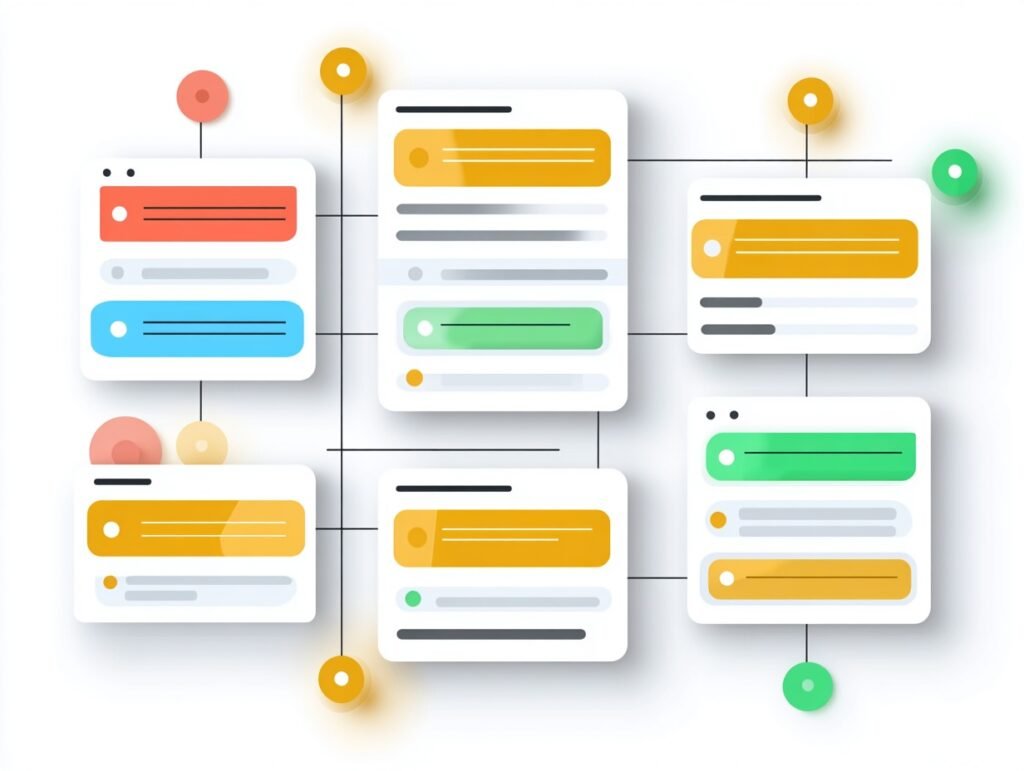

Project managers today are juggling more tasks as AI tools become common across industries. Tracking AI-influenced decisions is now a key accountability challenge. An AI decision log template provides project managers with a structured way to document what the AI recommended, why it was used, and how the team responded. Without such records, gaps in documentation can cause problems later. Building an effective logging practice is simpler than it seems—here’s what you need to know.
Why Project Managers Need to Track AI Decisions
AI is already affecting project outcomes in ways that may not be obvious. Tools powered by machine learning shape schedules, flag risks, and suggest resource allocations, often with their recommendations being followed automatically by project managers.
This increased AI influence means documentation is essential. If a project fails and AI played a role, you must trace decisions to their source. As regulators and clients demand greater transparency into AI use, tracking AI decisions has become a core expectation for professional project managers. Those who implement this now will be well prepared for future demands (Cheong, 2024).
What Goes Into an Effective AI Decision Log Template
An effective AI decision log template includes several key components. It should first name the specific AI tool or system used, as the tool’s identity is central to accountability.
Next, document the AI recommendation or output. Be precise. Avoid vague notes like “AI suggested a schedule change.” Instead, record the specific change and its data or rationale. Then, log the team’s decision: Did you accept, modify, or reject it? That human element shows the team exercised judgment rather than just following AI. Finally, capture context: date, project phase, team member reviewing, and any relevant notes (Al-Arafat et al., 2025).
How to Build Your AI Decision Log Template From Scratch
Building an AI decision log can be simple. Use a shared document or spreadsheet, so all team members can contribute. Consistency is essential: log every AI-influenced decision the same way, every time, to ensure reliability.
Decide which fields to include: timestamp, project name, AI tool, recommendation, human decision, and decision-maker. Add an outcome-tracking field to capture the later results of each AI decision. This collected data helps you assess tool effectiveness and makes your log a learning resource (Felicetti et al., 2024).
Keeping Your Log Practical and Sustainable
Teams often create logs that are too complex to maintain. If logging takes too long, people will stop. Keep the process quick and intuitive so participation remains consistent.
Design your log for speed and ease of use. Offer dropdowns whenever possible and minimize the number of required narrative fields. Set an expectation to complete logs within 24 hours of any AI-influenced decision, while details are fresh. Embedding the log into your workflow and project management tools keeps it accessible and encourages regular use (Almalki, 2025).
Using Your AI Decision Log Template to Improve Team Accountability
Once your log is in use, it becomes a valuable review and accountability tool. Use it in project reviews to see how AI shaped decisions and to provide transparent evidence for clients or leadership.
If you find your team often overrides a certain AI tool, your log highlights this trend for investigation. Whether the tool is mismatched or trust is lost, the log offers insights beyond gut feelings. This documentation supports clear accountability, helping retrace decisions when needed (Cheong, 2024).
Integrating Your Log With Broader Project Documentation
Connect your AI decision log with broader project documentation. Link log entries to project milestones or change requests so anyone reviewing project history can see how AI factored into major steps.
Incorporate your AI log into lessons-learned documentation at project close. Reviewing logs shows what worked, where judgment diverged from AI, and offers learning opportunities. As AI governance requirements expand, having a comprehensive log demonstrates best practices (Executive Office of the President, 2023).
Common Mistakes to Avoid When Logging AI Decisions
Even with the best intentions, teams fall into predictable traps. One of the most common is logging only the decisions where the AI was “wrong.” That approach misses the point entirely. The log should capture all significant AI-influenced decisions, regardless of outcome.
Some teams treat their logs as meaningless exercises. Instead, regularly review and reference the log in meetings and retrospectives. The log’s role is to increase insight and accountability—not blame. Stay objective and focus on decisions, not people (Al-Arafat et al., 2025).
Making the Most of Your AI Decision Log Template Going Forward
As AI becomes more embedded in project management workflows, now is the time to act. Start building structured documentation processes today and encourage your team to adopt an AI decision log template as an integral part of your project toolkit. Taking this step promptly will solidify your position as a forward-thinking project manager and help your organization stay ahead.
Don’t wait for perfection—get started. Select a project, apply an AI decision log for a month, and analyze what you gain. Adjust the format based on feedback and expand to other projects. Taking the first step now puts you on the leading edge as expectations change. Develop AI decision logging as a central professional skill and empower yourself to lead with confidence in the evolving landscape (Felicetti et al., 2024).
References
Al-Arafat, M., Kabir, M. E., Morshed, A. S. M., & Islam, M. M. (2025). Artificial intelligence in project management: Balancing automation and human judgment. Frontiers in Applied Engineering Technology, 2(01), 18–29.
Almalki, S. S. (2025). AI-driven decision support systems in agile software project management: Enhancing risk mitigation and resource allocation. Systems, 13(3), 208. https://doi.org/10.3390/systems13030208
Cheong, B. C. (2024). Transparency and accountability in AI systems: Safeguarding wellbeing in the age of algorithmic decision-making. Frontiers in Human Dynamics, 6, Article 1421273. https://doi.org/10.3389/fhumd.2024.1421273
Executive Office of the President. (2023). Executive order on the safe, secure, and trustworthy development and use of artificial intelligence. https://www.whitehouse.gov/briefing-room/presidential-actions/2023/10/30/executive-order-on-the-safe-secure-and-trustworthy-development-and-use-of-artificial-intelligence/
Felicetti, A. M., Cimino, A., Mazzoleni, A., & Ammirato, S. (2024). Artificial intelligence and project management: An empirical investigation on the appropriation of generative chatbots by project managers. Journal of Innovation & Knowledge, 9(3), 100545. https://doi.org/10.1016/j.jik.2024.100545