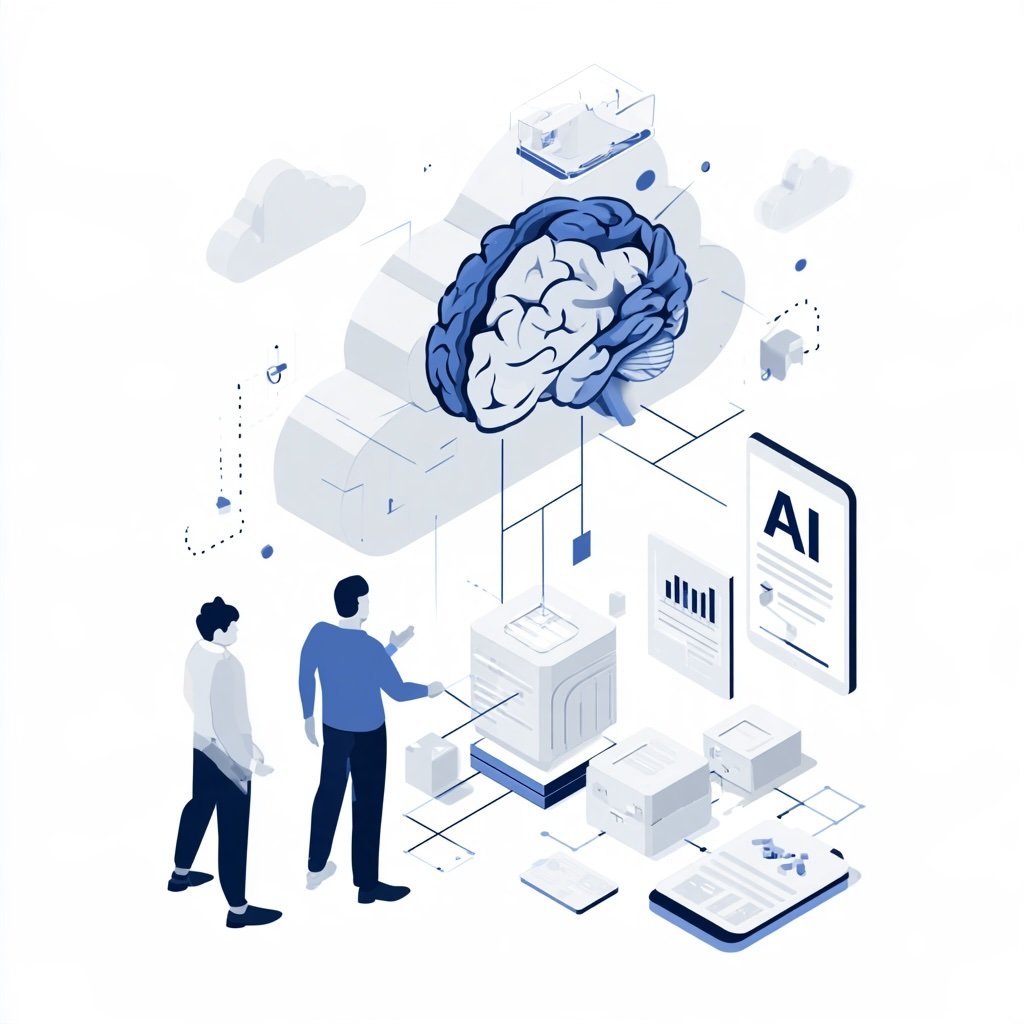

AI tools are everywhere now. But getting them to work with your existing systems is another story. That is the job of AI cloud integration. It connects models, data, and apps so they work together smoothly. However, there is more than one way to do it. So let’s look at the main approaches and how to pick the right one for your team.
Why AI Cloud Integration Is Getting Harder
Adoption is climbing fast. Flexera’s 2026 State of the Cloud report found that 45% of organizations now use generative AI extensively, up from 36% a year earlier (Flexera, 2026). Meanwhile, 81% use it in some form (IT Brief UK, 2026). That growth brings pressure.
For example, AI workloads are driving up cloud waste. Flexera found that wasted cloud spend rose to 29%, the first increase in five years (Flexera, 2026). Moreover, AI workloads are variable and hard to forecast. As a result, budgets quickly become messy. Even before this surge, 84% of organizations said managing cloud spend was their top challenge, and 77% pointed to security (Flexera, 2025). So integration choices are no longer just technical. They shape cost and risk too.
That is why the approach you pick matters so much. A good choice keeps costs visible and data safe. A poor one creates hidden bills and security gaps. Before comparing options, it helps to know what each one offers. Let’s start with the most common path.
Option One Is the Managed Platform Route
The simplest path is a managed AI platform from your main cloud provider. Think of the AI services offered inside AWS, Azure, or Google Cloud. You get models, hosting, and security tools in one place. Therefore, setup is quick. Billing also stays in one familiar account.
However, there are trade-offs. You may be limited to the models your provider offers. Switching later can be painful. Still, for teams that already live in one cloud, this route makes a lot of sense. It keeps data close to where it already sits. It also reuses the identity and access controls you trust today. For many companies, that is the fastest way to get working projects into production.
Option Two Is the API-First Approach
Next, you can connect to AI models through APIs. In this approach, your apps call a model provider directly. This gives you more choice. For example, you might use one model for writing and another for code. You can also swap models as better ones arrive.
On the other hand, you take on more work. You must manage keys, track usage, and secure data in transit. Costs can also spread across many vendor bills. So you need clear tagging and monitoring from the start. This approach suits teams with strong engineering skills. It also suits companies that want to avoid lock-in. Just be ready to build some plumbing yourself.
A growing middle ground also exists. Many teams now place a gateway layer between their apps and model providers. That gateway handles routing, logging, and spending limits in one spot. As a result, developers keep their freedom while finance and security teams keep visibility.
Option Three Is a Hybrid Setup
Finally, many firms choose a hybrid setup. They keep sensitive data and some models in private environments. Then they use public cloud AI for everything else. This balances control with flexibility.
Hybrid is common in regulated industries like banking and healthcare. It also helps when certain data cannot leave a region. However, it is the most complex option to run. You need tools that span multiple environments. You also need people who understand them. Because of that, hybrid works best when there is a clear reason. Don’t choose it to keep every door open.
To make hybrid manageable, standardize wherever you can. Use the same monitoring tools across environments. Likewise, apply the same access policies everywhere. Consistency keeps the extra complexity from turning into chaos.
How to Pick Your AI Cloud Integration Path
So how do you decide? Start with your data. Where does it live, and how sensitive is it? Next, look at your team’s skills. A small team usually does better with a managed platform. A large engineering group may prefer APIs.
After that, consider governance. Flexera’s research shows that 47% of large enterprises now have dedicated AI governance teams or roles (IT Brief UK, 2026). Whatever you choose, give someone clear ownership of cost and risk. Also, build in cost tracking early. AI bills can surprise you.
Above all, start with one high-value use case. Prove it works. Then expand from there. A thoughtful AI cloud integration plan grows with you instead of boxing you in. That is how you turn AI hype into lasting value.
References
Flexera. (2025). 2025 state of the cloud report. https://info.flexera.com/CM-REPORT-State-of-the-Cloud
Flexera. (2026, March 18). Flexera finds cloud value is rising while AI waste grows [Press release]. https://www.flexera.com/about-us/press-center/flexera-finds-cloud-value-is-rising-while-ai-waste-grows
IT Brief UK. (2026). AI drives wasted cloud spend higher despite FinOps gains. https://itbrief.co.uk/story/ai-drives-wasted-cloud-spend-higher-despite-finops-gains