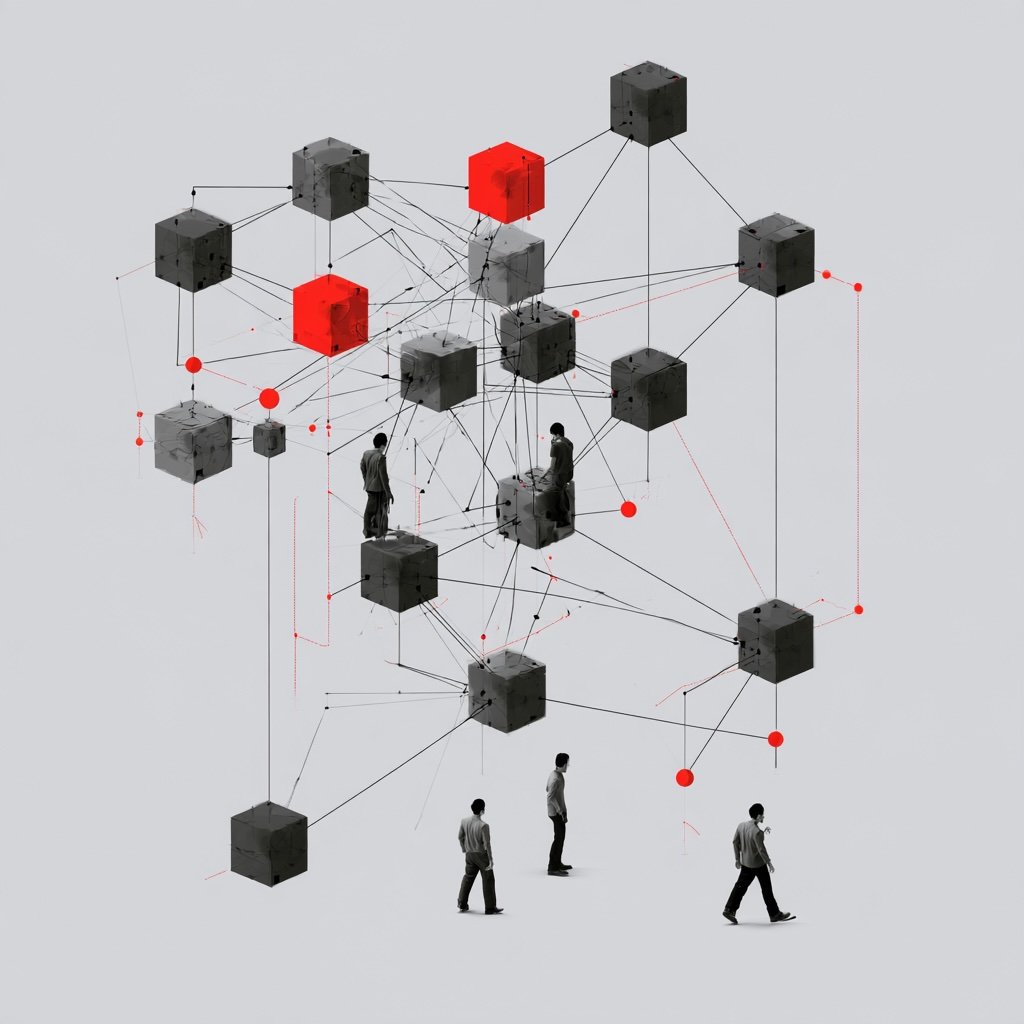

One AI agent can do a lot. But what happens when you give it teammates? That is the basic idea behind multi-agent systems. Instead of one model juggling every task, several specialized agents split the work and coordinate. It sounds futuristic. Yet it already powers real products today. So let’s unpack how these systems work, where they shine, and where they stumble.
What Are Multi-Agent Systems?
At their core, these systems are groups of AI agents working toward a shared goal. Each agent is a language model that can use tools, make decisions, and act in a loop. However, each one usually has a narrower job.
Think of it like a small project team. One agent plans the work. Others handle research, writing, or checking results. Meanwhile, a coordinator pulls everything together at the end.
Anthropic describes this as an orchestrator-and-worker pattern. In its Research feature, a lead agent breaks a question into parts, then sends subagents off to explore them in parallel (Anthropic, 2025). Afterward, the lead agent combines their findings into one answer.
Why Teams of Agents Can Beat a Solo Agent
So why bother with several agents? The main reason is scale. A single agent has one context window, which limits how much it can hold in mind. By contrast, multiple agents each get their own space to think.
The results can be impressive. Anthropic reported that a system with Claude Opus 4 leading Claude Sonnet 4 subagents outperformed a single Opus 4 agent by 90.2% on its internal research evaluation (Anthropic, 2025). Parallel work also cut research time by up to 90% on complex queries.
Moreover, specialization helps. An agent focused only on checking facts can be prompted and equipped differently than one focused on writing. As a result, each part of the job gets tighter attention.
The Hidden Costs
Of course, there is a trade-off. More agents means more computing. Anthropic found that agents use about four times as many tokens as regular chats, while multi-agent setups use about fifteen times as many (Anthropic, 2025). That adds up quickly.
Therefore, these systems make the most sense for high-value tasks. Deep research, complex analysis, and broad information gathering fit well. On the other hand, simple questions do not need a whole team.
Similarly, some tasks resist splitting. Anthropic notes that work requiring every agent to share the same context, or work with many dependencies between agents, is a poor fit for now (Anthropic, 2025). Most coding tasks fall into that category, since the pieces are so tightly connected.
Why Multi-Agent Systems Fail
Even when the task fits, things can go wrong. Researchers at UC Berkeley studied popular open-source frameworks and found 14 distinct failure modes (Cemri et al., 2025). They grouped them into three buckets, namely poor specifications, misalignment between agents, and weak verification of results.
In plain terms, agents misread their roles. They talk past each other. Sometimes they stop too early or never check their own work. As a result, the final output can look polished while hiding serious errors.
The business side shows similar strain. Gartner predicts that over 40% of agentic AI projects will be canceled by the end of 2027 because of rising costs, unclear value, or weak risk controls (Gartner, 2025b). Clearly, enthusiasm alone will not carry these projects.
How to Get Started the Smart Way
So how should a team approach this? First, start with a single agent. If it struggles because the task is too broad, then consider splitting the work. In other words, add agents to solve a real problem, not to follow a trend.
Next, write clear instructions for each agent. Define its job, its tools, and when it should stop. Additionally, build in a checking step so another agent or a human reviews the output.
Finally, watch your logs closely. Anthropic added full production tracing so its team could see how agents made decisions and diagnose failures (Anthropic, 2025). That kind of visibility helps you catch problems early. Meanwhile, track token costs so the bill does not surprise anyone.
Where This Is Heading
Looking ahead, Gartner expects AI to move from task-specific agents in 2026 toward multiagent ecosystems by 2029 (Gartner, 2025a). That means agents may soon collaborate across different apps, not just within one tool. In the meantime, keep an eye on emerging standards that help agents talk to each other and to their tools. As those mature, building a team of agents should get simpler and cheaper.
Ultimately, multi-agent systems are powerful but demanding. They reward careful design and punish shortcuts. Start small, measure costs, and verify everything. Do that, and your agent team might become one of your most productive teams of all.
References
Anthropic. (2025, June 13). How we built our multi-agent research system. https://www.anthropic.com/engineering/multi-agent-research-system
Cemri, M., Pan, M. Z., Yang, S., Agrawal, L. A., Chopra, B., Tiwari, R., Keutzer, K., Parameswaran, A., Klein, D., Ramchandran, K., Zaharia, M., Gonzalez, J. E., & Stoica, I. (2025). Why do multi-agent LLM systems fail? (arXiv:2503.13657). arXiv. https://arxiv.org/abs/2503.13657
Gartner. (2025a, August 26). Gartner predicts 40% of enterprise apps will feature task-specific AI agents by 2026, up from less than 5% in 2025 [Press release]. https://www.gartner.com/en/newsroom/press-releases/2025-08-26-gartner-predicts-40-percent-of-enterprise-apps-will-feature-task-specific-ai-agents-by-2026-up-from-less-than-5-percent-in-2025
Gartner. (2025b, June 25). Gartner predicts over 40% of agentic AI projects will be canceled by end of 2027 [Press release]. https://www.gartner.com/en/newsroom/press-releases/2025-06-25-gartner-predicts-over-40-percent-of-agentic-ai-projects-will-be-canceled-by-end-of-2027