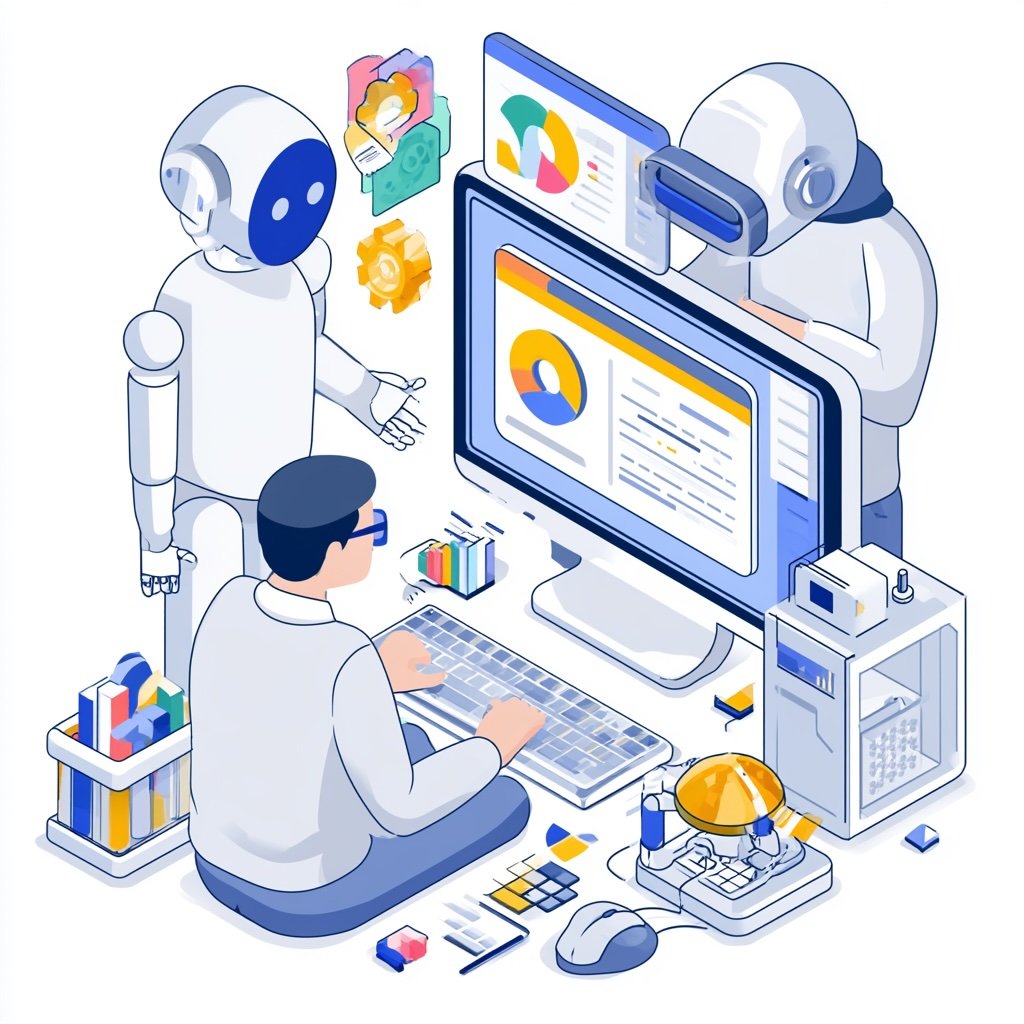

AI-Native Testing is rapidly transforming software quality assurance in 2026. Instead of relying on static scripts that break with interface changes, teams now deploy intelligent test agents that observe, generate, and adapt test cases as products evolve. A recent survey found that organizations using AI-driven approaches improved defect detection rates by more than 30%. This post outlines what AI-Native Testing is and how teams can transition smoothly.
What Makes Testing AI-Native Rather Than AI-Assisted
There is an important distinction between testing that simply uses AI tools and testing that is genuinely AI-native. AI-assisted testing might use a model to suggest test cases that a human still writes and maintains. AI-Native Testing goes further. Intelligent test agents observe the application directly, infer expected behavior from usage patterns and specifications, and generate, execute, and update tests with minimal human intervention. This shift matters because traditional test suites become brittle as applications change frequently, which is now the norm given continuous deployment practices. An AI-native approach treats the test suite as a living system that evolves alongside the product, rather than a static artifact that constantly requires manual upkeep from an already-stretched QA team.
How Intelligent Test Agents Work in Practice
Intelligent test agents typically combine several techniques. They crawl the application to build a behavioral model, generate test cases based on that model, and then continuously compare new application behavior against expected outcomes. When the agent detects a meaningful change in behavior, it can either flag the change for human review or automatically update the test expectation if the change appears intentional. This requires sophisticated reasoning about what counts as a bug versus an intended feature change. Leading platforms in this space increasingly use large language models to interpret commit messages, pull request descriptions, and product specifications, enabling more reliable judgment than purely rule-based systems could achieve on their own. This blending of behavioral observation with language understanding is what separates the newest generation of tools from earlier automation attempts.
Benefits of AI-Native Testing for Engineering Teams
The benefits of AI-Native Testing go beyond time savings. It reduces QA maintenance, often catches overlooked edge cases, and provides faster bug feedback, making fixes cheaper. As a result, QA engineers can focus on higher-impact work, increasing job satisfaction and improving product quality.
Challenges and Limitations to Plan For
Despite its promise, AI-Native Testing brings challenges. Intelligent agents can produce false positives or false negatives, making it essential to have escalation processes for ambiguous issues. Integrating these tools into existing pipelines, especially for legacy systems, needs careful consideration. Security must be addressed, as test agents often require broad access. Teams should implement robust access controls and data policies before deployment in sensitive areas.
Getting Started With AI-Native Testing on Your Team
Start small rather than attempting a full replacement of your existing test suite. Identify a single service or feature area where test maintenance has become a persistent pain point, and pilot an intelligent test agent there first. Carefully measure defect detection rates and maintenance time savings before expanding further. Moreover, keep your QA engineers closely involved in the rollout, since their domain knowledge of what the application is supposed to do remains essential context that improves the agent’s performance. Over time, as trust builds and the tooling matures, expanding AI-Native Testing across more of your codebase becomes a natural and low-risk progression rather than a disruptive overhaul.
Where This Trend Is Headed Next
Looking forward, AI-Native Testing is likely to become the default expectation rather than a competitive differentiator within the next few years. As more vendors mature their offerings and integration patterns become standardized, the barrier to adoption will continue to fall. Engineering leaders who start building institutional experience now, even through small pilots, will be far better positioned than those who wait for the technology to fully mature before engaging with it. The teams getting ahead today are not necessarily the most technically sophisticated, but rather those willing to experiment early and learn from the inevitable rough edges along the way.
References
Capgemini. (2025). World quality report 2025-26. https://www.capgemini.com/insights/research-library/world-quality-report
Gartner. (2025). Top strategic technology trends for 2026. Gartner Research. https://www.gartner.com/en/information-technology/insights/top-technology-trends
GitHub. (2025). The state of AI in software development 2025. https://github.blog/news-insights/research/the-state-of-ai-coding-tools-2025/