
Multiagent Workflows in Project Management Are Here Now
Artificial intelligence is no longer something project managers observe from a distance. Multiagent workflows in project management are landing in real organizations right now. Teams are deploying agents that automatically update status reports, flag overdue tasks, and surface resource conflicts before they escalate. This is genuinely useful. It also introduces a layer of complexity that most PM frameworks were not designed to handle. Gartner identifies agentic AI as a top strategic technology trend for 2026, and program management is among the five industries with the fastest adoption rates (Gartner, 2025). So the question for PMs is no longer whether to engage with this technology. The question is how to govern it well.
What Multiagent Workflows Actually Look Like on a Project
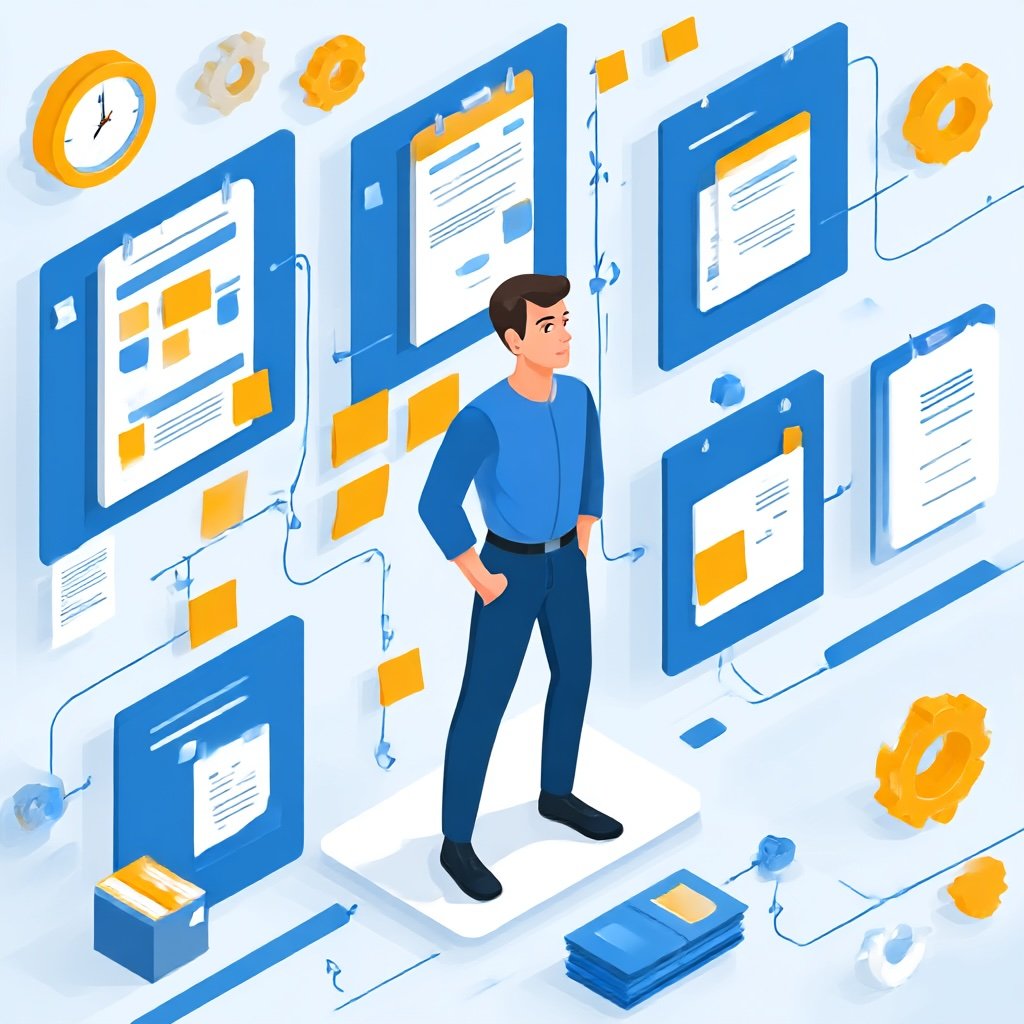
A multiagent project workflow might look like this. One agent monitors your project management tool for tasks that slip their due dates. A second agent sends draft escalation messages for your review. A third agent cross-references resource calendars and flags double-bookings. A fourth agent pulls weekly status data and populates a report template. None of these agents makes final decisions. Each one prepares information or drafts an action. The PM reviews, approves, or overrides. That human-in-the-loop structure is the design pattern that maintains governance. Research from PMI suggests that AI-assisted project monitoring reduces undetected risk events by up to 35 percent when oversight protocols are clearly defined (PMI, 2025).
Furthermore, the keyword in that finding is clearly defined. Governance does not happen automatically.
Governing Multiagent Workflows in Project Management
Governance starts with accountability mapping. For every agent in your workflow, you need a clear answer to three questions. What can this agent do? What can it not do? Who is responsible when something goes wrong? Those answers should live in a simple document that your whole team can reference. Beyond that, escalation paths matter enormously. Agents will encounter situations they were not designed for. When that happens, they need a defined path to a human decision-maker rather than defaulting to a wrong action. Incident review processes borrowed from software engineering work well here. Treat unexpected agent behavior as a production incident. Investigate it, document it, and update your governance rules accordingly (Kerzner, 2024).
Additionally, permission boundaries are non-negotiable. An agent that can send emails, update project records, and access budget data simultaneously carries a significant blast radius if something goes wrong.
Multiagent Workflows in Project Management: Building Your Governance Playbook
Start small. Pick one repetitive PM task that consumes significant time and introduce a single agent for it. Document the scope explicitly. Run it for four weeks. Review the outputs daily for the first two weeks, then weekly. Note where the agent drifts from expected behavior. Use those observations to refine the rules. Only expand to a second agent after this review. Rushing to full multiagent deployment before governance is in place erodes stakeholder trust. Starting narrow and expanding deliberately builds trust. Multiagent workflows in project management boost productivity. Thoughtful governance ensures they’re safe and effective.
References
Gartner. (2025). Top strategic technology trends for 2026. Gartner Research. https://www.gartner.com/en/articles/gartner-top-10-strategic-technology-trends-for-2025
Kerzner, H. (2024). Project management for the AI era. Wiley. https://www.wiley.com/en-us/Project+Management+for+the+AI+Era-p-9781394249756
Project Management Institute. (2025). Pulse of the profession 2025: AI and the future of project management. PMI. https://www.pmi.org/learning/library/pulse-of-the-profession